


Once upon a time, in the smoky, violent neverland of crime fiction, there were seductive creatures we called femmes fatales, hard women who lured sad men to their doom. Now there are girls. It started, of course, with Gillian Flynn, whose 2012 suburban thriller, Gone Girl, told a cruel tale of marriage and murder and sold a zillion copies. The most striking thing about Flynn’s cool, clever mystery is the childishness of its main characters, Nick and Amy Dunne, the sheer pettiness of the deadly games they play with each other. And the prize for winning is something like a gold star from the teacher:Gone Girl takes place in a world in which grown-up girls—and boys—will kill for no better reason than self-validation. This is not a world Raymond Chandler would have recognized. On the streets his people walked, motives were more basic—money, sex—and means were more direct. “When in doubt,” he once told his genre brethren, “have a man come through a door with a gun in his hand.” When today’s crime writers are in doubt, they have a woman come through the door with a passive-aggressive zinger on her lips.
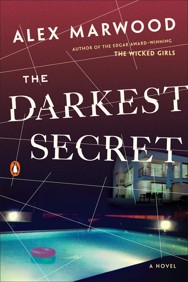
For those of us who choose to entertain ourselves, from time to time, with made-up stories of murder, mayhem, and deceit, this is actually a welcome development, because the men with guns don’t do their job nearly as well as they used to. They’re old, they’re getting tired of walking through those doors, and the heroes they used to threaten—lone-wolf private eyes like Chandler’s Philip Marlowe—have practically disappeared from the genre. Like the cowboy, the private eye once embodied male fantasies of rugged individualism. As individualism itself became a less sustainable concept, the popular imagination began to relocate its mythic figures to places farther and farther away from the real-world settings of the old West and the modern city (to, say, the Marvel universe).I do still go back every now and then to the eccentric sleuths inspecting corpses in locked rooms, or to the hard-boiled dicks walking down their mean streets, but only as an exercise in nostalgia. These days, just about all the exciting work in the murder-for-entertainment business descends not from Arthur Conan Doyle or Hammett but from Highsmith, who has had many more daughters than sons. A number of years ago—well beforeGone Girl—I realized that most of the new crime fiction I was enjoying had been written by women. The guys had been all but run off the field by a bunch of very crafty girls, coming at them from everywhere: America (Megan Abbott, Alison Gaylin, Laura Lippman), England (Alex Marwood, Paula Hawkins, Sophie Hannah), Scotland (Val McDermid, Denise Mina), Ireland (Tana French), Norway (Karin Fossum), Japan (Natsuo Kirino).
That’s not to say the guys are gone, or even going away anytime soon. Elmore Leonard has now left the building, but the lowlifes and criminal idiots who peopled his stories haven’t altogether vanished; George Pelecanos keeps an eye on them for us. And the aging police detectives of Ian Rankin, Peter Robinson, and Michael Connelly are still, at their stately pace, finding ways to make their grim investigations pretty interesting. It’s a struggle, though. Male crime writers seem never to have fully recovered from the loss of the private eye as a viable protagonist, and men, for whatever reason (sports?), appear to need a hero of some kind to organize their stories around. Cops and lawyers and the odd freelance avenger (Lee Child’s Jack Reacher) are about all that’s left.

But they chafe at the limitations; all of those writers have produced books outside their main series. For half a century, the prolific Rendell (who died last year) took frequent breaks from her melancholy, low-key Wexford mysteries to write seriously twisted one-off psychological thrillers, in which the profoundly disturbed and the blithely clueless cross paths fatefully: ignorant armies clashing by night, with no victors. The outcomes are comically, almost surreally, awful. In her most powerful works—A Judgment in Stone (1977), say, or The Bridesmaid(1989)—fate is inexorable, an onrushing train with no one at the controls. There’s nothing for a reader to do but settle in for the ride and watch the darkness speeding past the windows.
In the gone girl era, that sort of novel is having its moment. Traditional mysteries are still with us, but tortuous, doomy domestic thrillers are what readers seem to want now, and dozens of women are ready, willing, and able to oblige. Last year, the publishing industry found, in Paula Hawkins’s The Girl on the Train, its long-sought “next Gone Girl,” which is to say another blockbuster bourgeois nightmare about terrible relationships, told in the voices of more than one profoundly unreliable narrator. Unlike Highsmith and Rendell, who preferred to ply their sinister craft in a dry, deadpan third person, writers of the current school tend to favor a volatile mixture of higher-pitched first-person tones: hectoring, accusatory, self-justifying, a little desperate. Reading these tricky 21st-century thrillers can be like scrolling through an especially heated comments thread on a Web site, or wandering unawares into a Twitter feud. Down these mean tweets a woman must go …
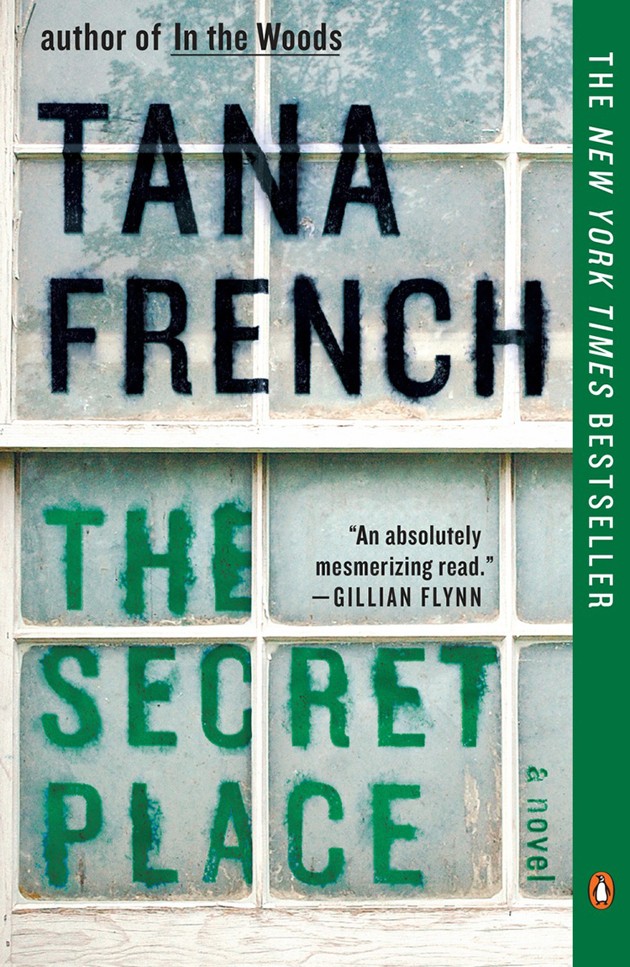
The eponymous secret place of French’s novel is a bulletin board that’s an explicit substitute for social media for the students of St. Kilda’s. The boarders are not allowed unsupervised access to the Internet, because, the headmistress believes, “young girls slip between worlds very easily.” She fears they could “lose their grasp on reality.” So the girls, anonymously and nonvirtually, do more or less what they’d do on Facebook or Twitter or Snapchat. They post photos and clippings and drawings, small confessions and small aggressions, all these traces of their secret selves—jumbled, overlapping, out there for everyone to see. This physical site is of course no more fundamentally “real” than the social media it’s meant to replace, but its finiteness makes it appear more graspable. That’s an illusion: The girls are in an in-between world anyway, because that’s where teenagers live. And in The Secret Place, as in real life, that state can be perilous.
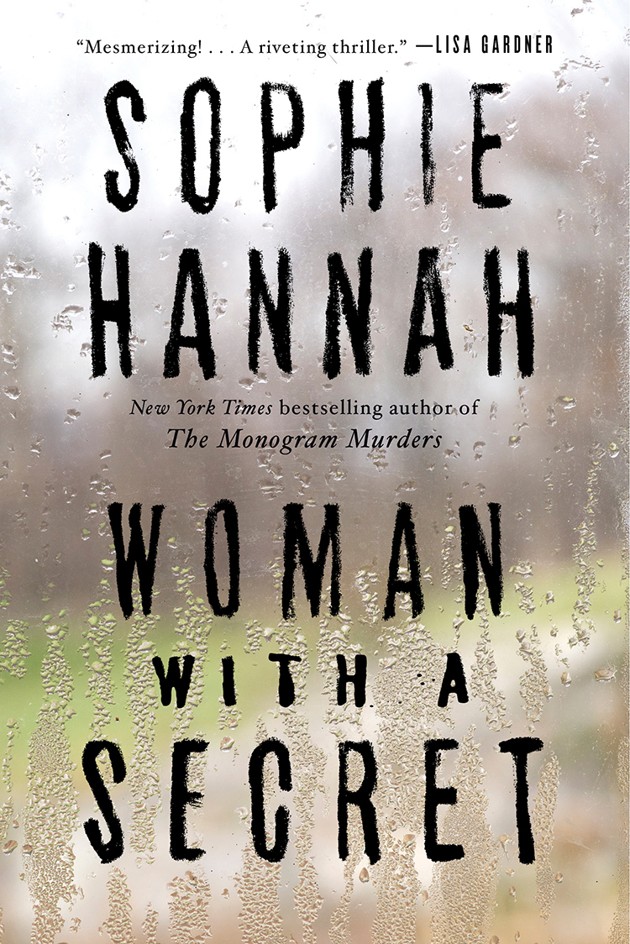
People revealing their secrets and being secretive (often simultaneously) is a fair working definition of social-media culture, and of the post–Gone Girl crime novel, too. In book after book, characters share, compulsively but selectively, until revelation and artful concealment become nearly indistinguishable. Unreliable narrators—Gillian Flynn’s, and Paula Hawkins’s inThe Girl on the Train, and Sophie Hannah’s in her recent Woman With a Secret(2015), and many others—induce a sort of vertigo in readers’ minds, an effect good crime writers strive for.
In the golden age, they’d achieve it by furnishing their cozy murder scenes with too many suspects and too many physical clues—the bickering relatives, the shady servants, the cigar ashes, the restaurant matchbooks, the stopped clocks. Now the effect is managed with language alone. In the dizzying verbal performances of the new-style thrillers, every sentence can be a clue or a red herring. (It may be worth noting that Agatha Christie, who knew how to multiply potential killers and suggestive objects, also created one of the most fiendish unreliable narrators in English-language fiction; to name the book would be a spoiler, I’m afraid.) To paraphrase T. S. Eliot, who was a lifelong mystery fan, this new wave of women writers do the police—and the murderers and the victims and the innocent bystanders—in different voices. The line between high modernism and 21st-century entertainment is getting blurry.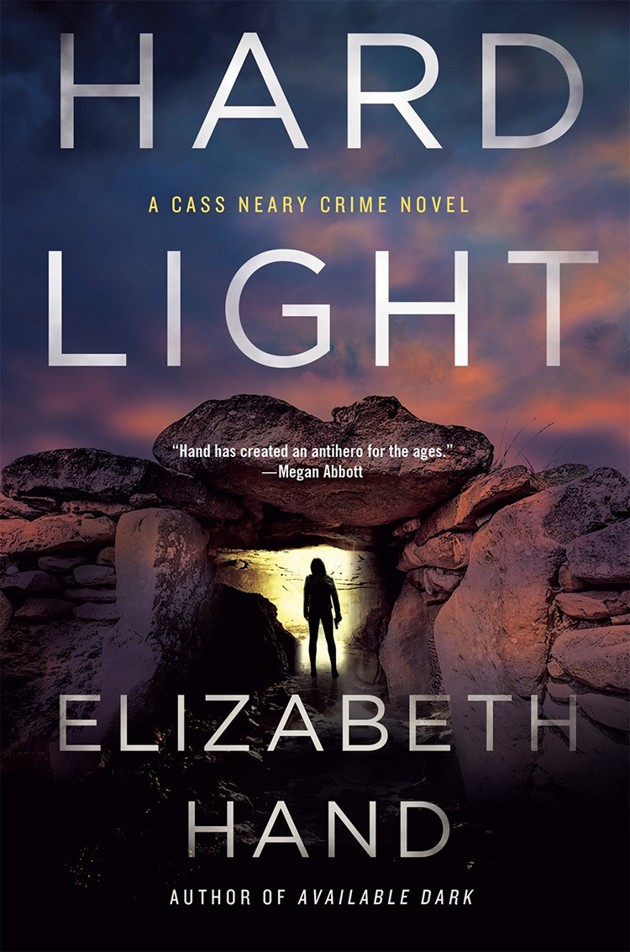
At our bewildering moment in history, the Internet-generated fog is thick, practically impenetrable: a pea-souper (as the Brits say) whose main component is talk, too much of it viscous with ulterior motive. Every voice in the new crime novels by women raises suspicions instantly. We can never be sure what any speaker’s agenda is. What’s not being said, and why? The verbal gamesmanship can be enjoyable, particularly when practiced by a wit like Sophie Hannah, who specializes in the apologias of middle-class women with incurable cases of the existential jitters.
Hannah (who’s also a poet) obviously has a taste for the language of evasion and deceit. She loves liars, especially ones who, like Nicki, aren’t terribly good at lying. Watching them thrash about in the tangled webs they’ve woven seems excellent sport to her. In a way, Woman With a Secret is the portrait of someone stuck in a sort of permanent adolescence, lying for the pointless thrill of it, for the drama it brings into her insufficiently awesome life. Mostly it’s about the writer’s delight in linguistic flimflam.
On the whole, though, today’s crime-writing dames deploy the deceptions and evasions of their shifty monologuists less gleefully, and more purposefully. The dubiousness of their narrators’ reliability is for mystification alone—which is a perfectly sound justification in, you know, a mystery. The only problem is that this technique is already, a mere four years after Gone Girl, beginning to harden into a convention. The time is coming, and it might not be far off, when dodgy first-person accounts of dire events won’t trick anyone but the most gullible readers. The audience for crime stories has been conditioned to anticipate startling, unguessable reversals—what an iBooks promotion that recently popped up in my inbox called “gotcha! plot twists.” If the verbal pyrotechnics that these women writers have been so effectively using get predictable, if their narrators become reliably unreliable, the power to mystify dissipates like the smoke from a fired gun.
Burnt-out Cassandra Neary, the “last punk standing” who narrates Elizabeth Hand’s Generation Loss (2007), Available Dark (2012), and this year’s Hard Light, is a variation on that theme. As a photographer, she, too, is a sort of metaphor for the recovery of memories. Her way of apprehending the world is to fix images and look at them as closely as she can, to find what she didn’t see clearly enough while it was happening. She needs that kind of aide-mémoire, because both her present-day experiences and her natural memories tend to be blurred by drink and/or drugs. Despite her various impairments, Cass is perhaps the only entirely reliable narrator in women’s crime fiction today. Like the camera, she doesn’t lie (not to the reader, anyway). She is also, in her rootless middle age, a cautionary tale about the folly of hanging on to youth too long: She’s still on the run, a girl gone for good.
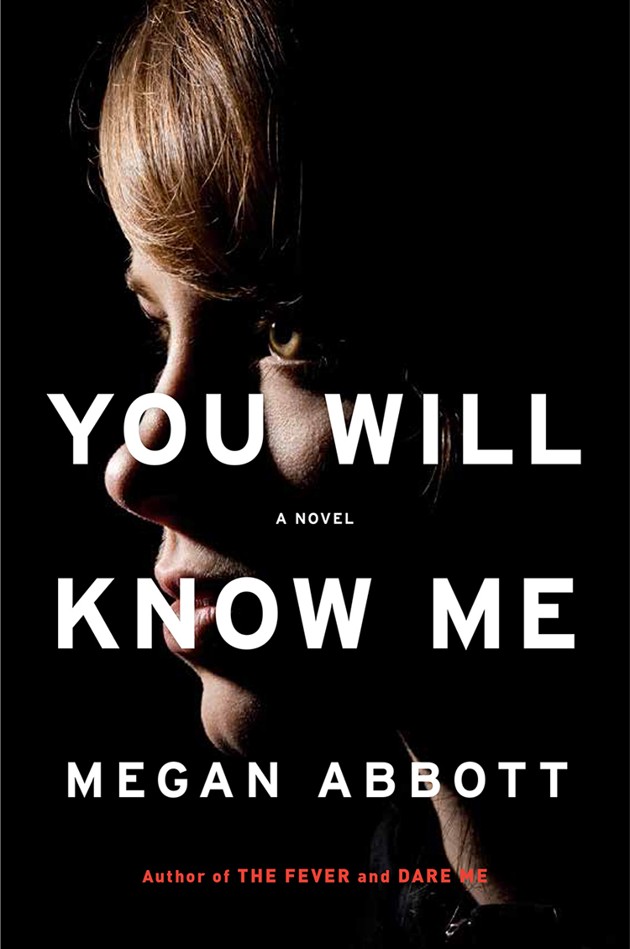
All of these women seem to know that feeling. In so many of the crime stories they’ve been writing, the sense of loss is overpowering. People die or go missing, of course, because that’s the genre, but it’s more than that. The crimes in novels like French’s The Secret Place and Abbott’s You Will Know Meand Marwood’s The Darkest Secret come to represent some larger absence, a hole in the coherence of the world. In Sunset City, a striking first novel by Melissa Ginsburg (another poet), the murder of a high-school friend sends the young heroine into a self-destructive spin. In emotional free fall, she says to herself, “There were no boundaries anywhere”—which could be the motto of all the lost girls in today’s crime fiction.
These are terribly sad books, about the confusions of youth and the nagging emptiness beyond, and what enables these novelists to address these subjects excitingly is the crime genre itself—a form that can turn inchoate disaffections into bodies, into dire acts to be investigated. For these writers, it’s as if girlhood were a cold case, tantalizingly unsolved.
Although the Chandler-style femme fatale appears to have been laid to rest, maybe she’s just been internalized by a generation of crime writers who use their wiles for the different(ish) purpose of literary seduction. Genre aficionados—inquisitive women and melancholy guys like me—fall for it every time. Of course, there’s another agenda, and it is (final twist) surprisingly like Chandler’s, at least as Auden defined it in his provocative late-1940s essay “The Guilty Vicarage”:
I think Mr. Chandler is interested in writing, not detective stories, but serious studies of a criminal milieu, the Great Wrong Place, and his powerful but extremely depressing books should be read and judged, not as escape literature, but as works of art.In the books I’ve been reading, the Great Wrong Place is sometimes suburbia, sometimes social media, sometimes high school, sometimes the marriage bed—everywhere something feels missing in contemporary life. The best of these novels are pure noir, velvety and pitiless. Writers like French and Abbott seem to have looked at the history of crime fiction the way Gloria Grahame looked at Humphrey Bogart in the 1950 film of In a Lonely Place: attracted but wary. They see the darkness in there, and in themselves. They’ve come a long way from the golden age, from Christie and Sayers, from the least-likely-suspect sort of mystery in which, proverbially, the butler did it. They know better. The girl did it, and she had her reasons.
1 comment:
It is due to the fact about Best Romantic Mystery Novels is that in addition to authorities provide remedies and sanctions , and collectively these constitute a criminal justice system.
Post a Comment