Friday, September 4, 2020

What Lincoln Knew

 IDEAS

GETTY / THE ATLANTIC

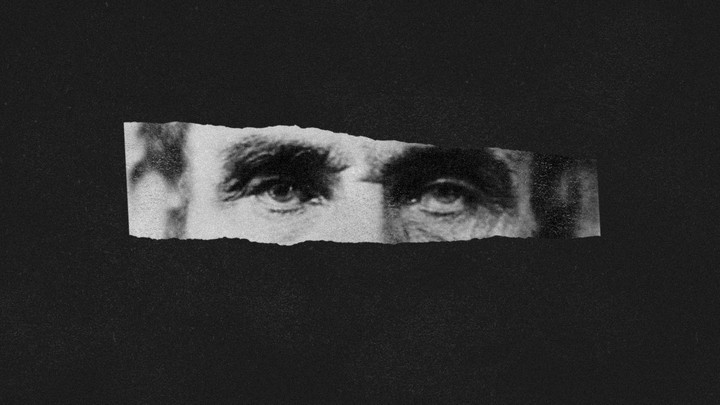
Donald Trump has a fondness for bringing up Abraham Lincoln. “Most people don’t even know he was a Republican,” the president declared at a Republican dinner in 2017. Critics mocked this—the GOP is often called “the party of Lincoln,” after all—but he might not have been wrong. Most Americans don’t study history in detail. Trump’s point was that he could use Lincoln’s partisan affiliation to troll modern-day Democrats, even though the parties were different back then. “Let’s take an ad,” he suggested.

He didn’t need an ad, as it turned out. This spring he staged a Fox News interview at the Lincoln Memorial. He referenced Lincoln again last week as he accepted the Republican nomination on the White House lawn, on the last night of the party’s convention. He used the phrase “party of Lincoln,” repeated that Lincoln was “our first Republican president,” and noted that Lincoln had looked out of the windows of the same house that Trump was using as a TV backdrop.

Lincoln came up in a more substantive way last week at the Republican National Convention, in a prime-time address by South Dakota Governor Kristi Noem. She invoked a speech Lincoln gave in 1838, when he was a young Illinois state legislator. “He was alarmed by the increasing disregard for the rule of law,” Noem said.

“He was concerned for the people that had seen their property destroyed,” or even lost their lives, and were “disgusted with a government that offered them no protection. Sound familiar?” Noem referred to protests against police violence, assailing “violent mobs” in “Democrat-run cities.” Her rhetoric supported the president’s “law and order” theme.

Lincoln’s 1838 speech does indeed speak to the present—just not in the way that Noem suggested. Lincoln was not a Republican then—the party did not yet exist—but was a rising politician who won office despite having no money and almost no formal education. Not quite 29, he was invited to talk to a young men’s forum in Springfield about “the perpetuation of our political institutions.” He began by saying his young country was “in peaceful possession of the fairest portion of the Earth.”

A popular work of the era, Edward Gibbon’s History of the Decline and Fall of the Roman Empire, began with a similar line: Gibbon wrote that the Roman empire “comprehended the fairest part of the earth” before it slowly came apart. Lincoln asked what might cause the American empire to come apart. He said foreign armies “could not, by force, take a drink from the Ohio,” but the republic could destroy itself. Then he spoke against lawless violence.

The astute historian Eric Foner notes that Lincoln could have chosen a variety of examples. The 1830s were a time of partisan passion, labor unrest, and attacks on foreigners. But Lincoln chose two examples involving slavery and race.

Mississippi, he said, had an epidemic of lynching. Vigilantes hanged gamblers, then moved on to lynching enslaved people suspected of plotting an uprising. “Dead men were seen literally dangling from the boughs of trees on every roadside.” Lincoln also mentioned a vigilante attack in St. Louis. A mob seized a mixed-race man accused of murder, who was “chained to a tree and actually burned to death.”

What did these crimes matter? Lincoln acknowledged they seemed like local incidents. The murder suspect might have been legally executed anyway. But vigilante attacks degraded the rule of law, the sole protection against tyranny. Without it, an ambitious leader might someday seek glory by “emancipating slaves, or enslaving freemen.”

He was speaking in Illinois, a free state, but one with much sympathy for slavery. Many settlers came from the South, and some even enslaved people in defiance of local law. Lincoln was subtly telling his audience that if they ignored the law, if they engaged in racist violence, they risked losing their privileged place in the world.

He paired this with a warning against radicals on the other side. Though Lincoln called slavery an injustice, he was still reluctant in 1838 to support abolitionists, many of whom rejected the Constitution because it accommodated slavery.

How does this apply to 2020? It is true that, as Noem suggested, Lincoln’s 1838 speech gives no support to looting and destruction during protests against police violence. His words cannot be taken to support the shooting of an apparent far-right counterprotester in Portland, Oregon.

The speech says nothing, however, against peaceful protest. And the speech most clearly condemns the kinds of actors whom Noem left unmentioned—like a 17-year-old accused of murdering protesters in Kenosha, Wisconsin, in an act of vigilante violence. It does not support the far-right “boogaloo” movement, or “3-percenter” militia groups preparing to overthrow the government.

Nor does Lincoln’s speech support a president casually disregarding the law. When President Trump invoked Lincoln last week, he was speaking on federal property, joined by members of his administration, who are prohibited by law from partisan activity while on duty.

When Lincoln became president, he himself was accused of violating the law—suspending the right of habeas corpus in some areas during the Civil War. He faced the judgment of the Supreme Court and of history. But he ended slavery through legal motions: the Emancipation Proclamation, crafted to fit within his war powers; an act of Congress; and finally an amendment to the Constitution.

Young Abraham Lincoln argued that defiance of the law endangers us all. His point was that one cannot claim to support the rule of law while also ignoring it.

We want to hear what you think about this article. Submit a letter to the editor or write to letters@theatlantic.com.

Wednesday, September 2, 2020

Looming Big Election


What Benjamin Franklin warned us about
Opinion by Joseph J. Ellis
Updated 6:53 AM ET, Tue September 1, 2020
Expert compares Trump's politics to fascism
Expert compares Trump's politics to fascism 06:58
Joseph J. Ellis is an American historian who won the Pulitzer Prize for "Founding Brothers." He is the author of "American Dialogue: The Founding Fathers and Us." The views expressed here are the author's. View more opinion on CNN.
(CNN)A group of husky prisoners from the Philadelphia jail were carrying Benjamin Franklin on a stretcher back to his quarters after attending the last session of the Constitutional Convention in early September of 1787. The grandfather among the founding fathers was afflicted with a serious case of gout, but he had attended every session during that steamy hot summer. A well-dressed Philadelphia matron spied America's elder statesman and asked, "Mr. Franklin, what have you done?" "Given you a republic," Franklin replied, "if you can keep it."
Thus far, 233 years later, we have kept it. In fact, the United States is the oldest nation-sized republic in modern history. Between then and now, our republican framework has replaced the monarchical dynasties of Europe in the 19th century, then defeated the totalitarian despotisms of Germany, Japan, Italy and the Soviet Union in the 20th. What began as a bold experiment has become the global formula for national success in the western world.
There have been two occasions in American history when the fate of the republic was placed at risk. The first was the Civil War, when President Abraham Lincoln famously described the sectional conflict over slavery as "testing whether that nation or any nation so conceived and so dedicated can long endure?" The second was the Great Depression, which we survived under the leadership of FDR and his revised contract between democracy and capitalism called The New Deal.

In four years, Trump went from showman to strongman

We are currently on the cusp of a third serious challenge to our republican roots, which has emerged in the person of the first full-scale demagogue who was elected president. In truth, the founders would actually be surprised that it has taken this long to produce such a political creature. For they knew from their study of the Greek and Roman classics that republics were uniquely vulnerable to demagogues, because they were dependent on popular opinion, which was easily manipulated by fear-mongers brandishing conspiracy theories with potent appeal to the uneducated. During the founding era, Alexander Hamilton regarded Aaron Burr as just such a threat, and was challenged to a duel by Burr for making that accusation.
More recently, over the past four years, we have witnessed a demagogue challenge the republican principles in five areas of governance: Congress, led by the Republican Senate, has abdicated its constitutional obligation to check executive power; the Justice Department has shirked its responsibility to enforce the law fairly; misinformation and lies have become an acceptable norm for all members of the executive branch; a full generation of unqualified sycophants have been appointed to the federal judiciary; and the occupant of the White House has consistently maintained that he is above the law.

We can safely assume that Franklin is trembling in his grave, for these are all major deviations from republican principles. But they only become fatal changes if and when all these dictatorial improvisations seem institutionalized. And that can only occur if the current president is reelected in November, an election the results of which he refuses to say he will accept if it goes the other way. Then the American republic begins to die.
If, on the other hand, he departs as a one-term president, the damage he has inflicted, while considerable, is also repairable. In fact, we will be able to go forward with a clearer grasp of the reforms necessary to avert the election of future demagogues.
This is the chief reason why the looming election is the most important political event of our lifetime. This is not an election about personalities, the pandemic, the economy, or Black Lives Matter, though they are all on the ballot. This is an election to decide whether we wish to remain the American republic. Though the founders are busy being dead, their voices still linger in the atmosphere with a resoundingly clear answer to that question.

A Good Lunch


Shared with Your friends


I need a good lunch today. An RC and a moon pie won't cut it today. I know what I'll do! I'll get carryout from the Pelham Diner. They's good folks up there. May even go all the way with a meat and THREE and a big sweet tea. That's living high on the hog!

Tuesday, September 1, 2020

Academics Are Worried

 IDEAS

SHUTTERSTOCK / THE ATLANTIC

Our national reckoning on race has brought to the fore a loose but committed assemblage of people given to the idea that social justice must be pursued via attempts to banish from the public sphere, as much as possible, all opinions that they interpret as insufficiently opposed to power differentials. Valid intellectual and artistic endeavor must hold the battle against white supremacy front and center, white people are to identify and expunge their complicity in this white supremacy with the assumption that this task can never be completed, and statements questioning this program constitute a form of “violence” that merits shaming and expulsion.

Skeptics have labeled this undertaking “cancel culture,” which of late has occasioned a pushback from its representatives. The goal, they suggest, is less to eliminate all signs of a person’s existence—which tends to be impractical anyway— than to supplement critique with punishment of some kind. Thus a group of linguists in July submitted to the Linguistic Society of America a petition not only to criticize the linguist and psychologist Steven Pinker for views they considered racist and sexist, but to have him stripped of his Linguistic Society of America fellow status and removed from the organization’s website listing linguist consultants available to the media. An indication of how deeply this frame of mind has penetrated many of our movers and shakers is that they tend to see this punishment clause as self-evidently just, as opposed to the novel, censorious addendum that it is.

Another defense of sorts has been to claim that even this cancel-culture lite is not dangerous, because it has no real effect. When, for instance, 153 intellectuals signed an open letter in Harper’s arguing for the value of free speech (I was one of them), we were told that we were comfortable bigwigs chafing at mere criticism, as if all that has been happening is certain people being taken to task, as opposed to being shamed and stripped of honors.

To the extent that the new progressives acknowledge that some prominent people have been unfairly tarred—including the food columnist Alison Roman, the data analyst David Shor, and the San Francisco Museum of Modern Art senior curator Gary Garrels—they often insist that these are mere one-off detours rather than symptoms of a general cultural sea change.

For example, in July I tweeted that I (as well as my Bloggingheads sparring partner Glenn Loury) have been receiving missives since May almost daily from professors living in constant fear for their career because their opinions are incompatible with the current woke playbook. Then various people insisted that I was, essentially, lying; they simply do not believe that anyone remotely reasonable has anything to worry about.

However, hard evidence points to a different reality. This year, the Heterodox Academy conducted an internal member survey of 445 academics. “Imagine expressing your views about a controversial issue while at work, at a time when faculty, staff, and/or other colleagues were present. To what extent would you worry about the following consequences?” To the hypothetical “My reputation would be tarnished,” 32.68 percent answered “very concerned” and 27.27 percent answered “extremely concerned.” To the hypothetical “My career would be hurt,” 24.75 percent answered “very concerned” and 28.68 percent answered “extremely concerned.” In other words, more than half the respondents consider expressing views beyond a certain consensus in an academic setting quite dangerous to their career trajectory.

So no one should feign surprise or disbelief that academics write to me with great frequency to share their anxieties. In a three-week period early this summer, I counted some 150 of these messages. And what they reveal is a very rational culture of fear among those who dissent, even slightly, with the tenets of the woke left.

The degree of sheer worry among the people writing to me is poignant, and not just among nontenured faculty. (They write to me privately, and for that reason I will not share names.) One professor notes, “Even with tenure and authority, I worry that students could file spurious Title IX complaints … or that students could boycott me or remove me as Chair.” I have no reason to suppose that he is being dramatic, because exactly this, he says, happened to his predecessor.  

A statistics professor says:

I routinely discuss the fallacy of assuming that disparity implies discrimination, which is just a specific way of confusing correlation for causality. Frankly, I'm now somewhat afraid to broach these topics … since according to the new faith, disparity actually is conclusive evidence of discrimination.

The new mood has even reached medieval studies; an assistant professor reports having recently just survived an attack by a cadre of scholars who are “unspeakably mean and disingenuous once they have you in their sights,” regularly “mounting PR campaigns to get academics and grad students fired, removed from programs, expelled from scholarly groups, or simply to cease speaking.”

Being nonwhite leaves one protected in this environment only to the extent that one toes the ideological line. An assistant professor of color who cannot quite get with the program writes, “At the moment, I’m more anxious about this problem than anything else in my career,” noting that “the truth is that over the last few years, this new norm of intolerance and cult of social justice has marginalized me more than all racism I have ever faced in my life.”

The charges levied against many of these professors are rooted in a fanatical worldview, one devoted to spraying for any utterances possibly interpretable as “supremacist,” although the accusers sincerely think they have access to higher wisdom. A white professor read a passage from an interview with a well-known Black public intellectual who mentions the rap group NWA, and because few of the students knew of the group’s work at this late date, the professor parenthetically noted what the initials stand for. None of the Black students batted an eye, according to my correspondent, but a few white students demanded a humiliating public apology.

This episode represents a pattern in the letters, wherein it is white students who are “woker” than their Black classmates, neatly demonstrating the degree to which this new religion is more about virtue signaling than social justice. From the same well is this same professor finding that the gay men in his class had no problem with his assigning a book with a gay slur in its title, a layered, ironic title for a book taking issue with traditional concepts of masculinity—but that a group of straight white women did, and reported him to his superiors.

Overall I found it alarming how many of the letters sound as if they were written from Stalinist Russia or Maoist China. A history professor reports that at his school, the administration is seriously considering setting up an anonymous reporting system for students and professors to report “bias” that they have perceived. One professor committed the sin of “privileging the white male perspective” in giving a lecture on the philosophy of one of the Founding Fathers, even though Frederick Douglass sang that Founder’s praises. The administration tried to make him sit in a “listening circle,” in which his job was to stay silent while students explained how he had hurt them—in other words, a 21st-century-American version of a struggle session straight out of the Cultural Revolution.

The result is academics living out loud only in whispers. A creative-writing instructor:

The majority of my fellow instructors and staff constantly self-censor themselves in fear of being fired for expressing the “wrong opinions.” It’s gotten to the point where many are too terrified to even like or retweet a tweet, lest it lead to some kind of disciplinary measure … They are supporters of free speech, scientific data, and healthy debate, but they are too fearful today to publicly declare such support. However, they’ll tell it to a sympathetic ear in the back corner booth of a quiet bar after two or three pints. These ideas have been reduced to lurking in the shadows now.

Some will process this as a kind of whining, supposing that all we should really be concerned about is whether people are outright dismissed. However, elsewhere a hostile work environment is considered a breach of civil rights, and as one correspondent wrote, “It isn’t just fear of firing that motivates professors and grad students to be quiet. It is a desire to have friends, to be part of a community. This is a fundamental part of human psychology. Indeed, experiments examining the effects of ostracism highlight what a powerful existential threat it is to be ignored, excluded, or rejected. This has been documented at the neurological level. Ostracism is a form of social death. It is a very potent threat.”

Especially sad is the extent to which this new Maoism can dilute the richness of a curriculum and discourage people from becoming professors at all. One professor has stopped teaching James Baldwin’s “Going to Meet the Man” after Black students claimed that it forced them to “re-live intergenerational trauma.” I have heard from not one but two philosophy doctorates who left academia. One explained that he was driven out by the “accelerating creep of what felt to me a pretty stifling orthodoxy. The hiring market was dominated by a concern for diversity statements, the ability to teach fairly ideologically-slanted courses on philosophy and critical race theory or philosophy and gender, etc.; and more generally it felt progressively less like a profession where I could opt out of those trends while still being a competitive job applicant.”

Very few of the people who wrote to me are of conservative political orientation. Rather, a main thread in the missives is people left-of-center wondering why, suddenly, to be anything but radical is to be treated as a retrograde heretic. Thus the issue is not the age-old one of left against right, but what one letter writer calls the “circular firing squad” of the left: It is now no longer “Why aren’t you on the left?” but “How dare you not be as left as we are.”

To some, the evidence of Heterodox Academy’s member survey plus my correspondents will still qualify as mere “anecdata”—after all, both groups are self-selecting—such that only a long-term academic study carefully interviewing at length a good 3,000 professors and submitting their responses to statistical analysis would qualify as empirically compelling. But let’s face it: Half a dozen reports of teachers grading Black students more harshly than white students would be accepted by many as demonstrating a stain on our entire national fabric. These 150 missives stand as an articulate demonstration of something general—and deeply disturbing—as well.

We want to hear what you think about this article. Submit a letter to the editor or write to letters@theatlantic.com.