Thursday, June 18, 2020

Time to Choose

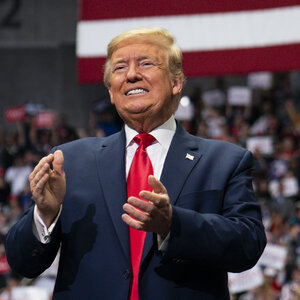
FILE PHOTO: U.S. President Donald Trump reacts during a campaign rally in Charlotte, North Carolina, U.S., March 2, 2020. REUTERS/Carlos Barria/File Photo
May 28, 2020 at 9:00 a.m. CDT
SURVIVING AUTOCRACY
By Masha Gessen. Riverhead. 270 pp. $26.
There are Trump books, written by journalists, that try to tell us what is happening. Then there are Trump books, published by intellectuals, that try to tell us what it means. There are also the Trump books, authored by historians, who, distinguishing the unprecedented from the merely unusual, try to tell us that we’ve seen this before. And there are Trump books, fashioned by polemicists, that, after passing judgment on the era, try to tell us what to do about it.
“Surviving Autocracy” by Masha Gessen combines some elements of all these approaches, perhaps because its author spans all these disciplines. It echoes analyses and arguments from other Trump books that probe more deeply into particular arenas, yet it is not redundant; this book does not repeat as much as it distills. The result is almost the Platonic ideal of the anti-Trump Trump book, as though manufactured in a lab to affirm every suspicion, stoke every fear and answer every question by those readers desperately seeking a “recovery from Trumpism,” as Gessen writes. The book’s implied “we,” though sometimes encompassing the nation in full, is usually limited to the horrified.
And those who are horrified by Trump will find that “Surviving Autocracy” is a time capsule packed with all their anxieties, and all their certainties, too. It offers discomfort and reassurance at once.
Gessen explores and connects themes she has long considered. Two days after the 2016 election, she published an essay in the New York Review of Books titled “Autocracy: Rules for Survival,” which drew on her experience growing up in the Soviet Union, reporting on Vladimir Putin and observing the Trump campaign. Her rules were memorable and to the point: Believe the autocrat. Do not be taken in by small signs of normality. Institutions will not save you. Be outraged. Don’t make compromises. And remember the future, she wrote, urging readers to develop a vision for a post-Trump America.
(Riverhead Books)
In “Surviving Autocracy,” Gessen finds, no surprise, that such warnings were warranted. Trump was “the first major party nominee who ran not for president but for autocrat,” she argues. Rather than attempt to claim such power through one dramatic gesture, he has done so through a series of steps that, put together, “change the nature of American government and politics.” These include undermining any mechanisms of accountability, downgrading the daily political discourse, abusing his office for the enrichment of his family, embracing xenophobia and praising foreign dictators while picking fights with democratic allies. This is the gradual erosion of democracy, not by coup but by cooptation. “All of this, though plainly visible, was unfathomable,” Gessen explains, perfectly capturing the cognitive dissonance of life in Trump’s America.
For all those who hoped that U.S. institutions and norms of behavior would curb Trump’s impulses, Gessen offers no comfort. Institutions are helpless “against a president acting in bad faith,” she writes. She is conflicted over the investigation by special counsel Robert Mueller — and ultimately disappointed by it. Mueller, who became FBI director just days before the 9/11 attacks, is “the author of the contemporary American surveillance state,” Gessen contends, and therefore an odd vehicle of deliverance from a president with authoritarian pretensions. Although she concedes that Mueller’s report constitutes “the most comprehensive portrait of Trumpism to date,” she faults its “institutional restraint” for leaving it vulnerable to a battery of interpretations.
Gessen here seems to join an ongoing critical reappraisal of the special counsel — not from conspiracists who brand Mueller an agent of the “deep state,” but from journalists and analysts concluding that he blew it. In “A Very Stable Genius,” Washington Post reporters Philip Rucker and Carol Leonnig write that Mueller “fumbled the moment,” that he had only himself to blame for his report’s subsequent misrepresenation, that the lawman was “too invested in the norms of an institution of yore.” And in “Trumpocalypse,” Atlantic writer David Frum blasts Mueller for looking only for prosecutable crimes, for focusing solely on the 2016 election and for deferring to the presidency by not reaching a judgment on Trump’s potential criminality. Mueller’s choices, Frum argues, “guaranteed that his work would deliver no useful result.”
Perhaps norms and institutional restraint become less appealing, and an essential historical document less impressive, when they fail to deliver an expected or desired outcome? Once the Mueller report landed in Congress, it did so with a “dull thud,” Gessen concludes. “It was not, discernibly, the end or the beginning of anything.”
“Surviving Autocracy” raises a classic Trump-era dilemma: Did democratic institutions work because without them things would have been much worse, or did they fail because Trump was able to abuse or ignore them to the extent that he did? Is American democracy half full, or half full of it?
Gessen worries that the coronavirus pandemic has created just the conditions that could allow Trump to further accumulate power and further erode democratic guardrails. “Trump did not deploy the virus, but he was positioned to reap its reward,” she writes — and that reward came in the form of an anxious, hesitant electorate. “The inability to plan, to have the certainty of being able to feed one’s family today and tomorrow, produces more anxiety and fear of change.”
Yet change is precisely what the country requires now, Gessen argues, and she doesn’t mean simply a new choice in November (though she certainly wants that, too). “We will have to do more than vote, and more than campaign,” she writes. “We will have to abandon the idea of returning to an imaginary pre-Trump normalcy when American institutions functioned as they should.” Instead, she emphasizes that our democratic institutions — our legislatures and courts and civil society — are not, at their foundation, about rules and norms but about imagining and devising the kind of nation we want to be. They are about “moral aspiration,” Gessen writes.
Like so many works in the anti-Trump canon, “Surviving Autocracy” warns against normalizing this presidency. One of Gessen’s strengths is her ability to capture what daily life feels and sounds like in the Trump era, and how abnormality remains so even when it is pervasive. This presidency “remains unimaginable — even if it is observable,” Gessen writes. Trump always shocks, even if he no longer surprises.
“Surviving Autocracy” grasps what it is like when the president distorts language beyond any logic. “Trump’s word piles fill public space with static,” Gessen writes, “the way pollutants in an industrial city can saturate the air, making it toxic and creating a state of constant haze.” She describes the eerie timelessness of the Trump years, when days and weeks and months blur together, a condition aggravated by the coronavirus pandemic. “In the Trump era, there is no past and no future, no history and no vision — only the anxious present.” (Readers of Gessen’s National Book Award-winning “The Future Is History” will remember her similar description of life in the U.S.S.R. and in Putin’s Russia.)
And the author cautions against finding solace in the president’s reliable incompetence, as some did early in Trump’s tenure, assuming that he was too inept to undermine democracy. “Trump’s incompetence is militant,” she writes. “It is not a factor that might mitigate the threat he poses: it is the threat itself.” The administration’s handling of the coronavirus crisis makes that threat especially clear.
Gessen believes that the pandemic allows Trump to govern as he likes: “unilaterally, decisively, with few checks on his power — and with the eyes of the nation riveted to him.” And she sees parallels between them. “We relate to the virus, in some ways, as we relate to Trump,” she writes. “We yearn desperately to return to a time of imagined normalcy, before Trump and before the coronavirus.”
Perhaps. But the irony of the health and economic crisis this pandemic has unleashed is that it can make the pre-covid Trump presidency itself seem like a more normal time. That is the reelection pitch, after all, with Trump pledging to recover the greatness he claims to have delivered. But recovery, Gessen writes, means committing to reinvention — “of institutions, of what politics means to us, and of what it means to be a democracy, if that is indeed what we choose to be.” If this book offers no other imperative, it is to remember that the choice always remains.

Review of White Fragility


June 18, 2020 at 1:45 p.m. CDT
WHITE FRAGILITY: Why It’s So Hard for White People to Talk About Racism
By Robin DiAngelo. Beacon Press. 169 pp. $16.
A shadow is cast on a mural being painted along 14th Street NW as large demonstrations after the death of George Floyd were expected June 6 in Washington, D.C.
“Race relations are profoundly complex,” Robin DiAngelo writes in “White Fragility,” a book that, two years after a best-selling debut, is having a new burst of popularity and urgency. In the midst of a nationwide debate on institutional racism and police violence, Americans are binge-reading (or at least bulk-buying) recent texts on race to help them grapple with that complexity. Alongside books such as Ibram X. Kendi’s “How to Be an Antiracist,” Carol Anderson’s “White Rage” and Ta-Nehisi Coates’s “Between the World and Me,”DiAngelo’s “White Fragility” — the No. 1 bestseller on the New York Times nonfiction list this week — is officially now part of a new canon.
Except it doesn’t deserve that distinction. Even as it introduces a memorable concept, “White Fragility” presents oversimplified arguments that are self-fulfilling, even self-serving. The book flattens people of any ancestry into two-dimensional beings fitting predetermined narratives. And reading DiAngelo offers little insight into how a national reckoning such as the one we’re experiencing today could have come about. In a “White Fragility” world, nothing ever changes, because change would violate its premise.
The killing of George Floyd and the widespread protests that followed have brought into the open, yet again, the systems of racism embedded in powerful Americans institutions such as law enforcement. Reimagining those institutions so they earn the trust of all Americans is the work of today but also of generations to come, an arduous and complicated effort. In DiAngelo’s telling, however, race relations in America are actually not “profoundly complex,” as she initially puts it, but simple and binary. White people should be regarded not as individuals but as an undifferentiated racist collective, socialized to “fundamentally hate blackness” and to institutionalize that prejudice in politics and culture. People of color, by contrast, are almost entirely powerless, and the few with influence do not wield it in the service of racial justice. People of color rarely emerge as fully formed characters in these pages, except to provide opportunities for white Americans to engage in an “authentic exploration of racial realities” — that is, to help them know when they are doing better.
(Beacon Press)
But white people don’t like to engage, as DiAngelo has often gleaned in her capacity as a diversity consultant for companies and other organizations. Whenever they are told that their race affords them systemic advantages, or that they can’t help being racist or benefiting from racism, or that their behavior is racially “problematic,” white people respond with anger, denial, guilt or tears — with white fragility. “Their responses are so predictable I sometimes feel as though we are all reciting lines from a shared script,” she writes.
Such reactions “reinstate white equilibrium” by repelling the challenge against racism and maintaining white dominance in the racial hierarchy, DiAngelo writes. “White fragility is not weakness per se. In fact, it is a powerful means of white racial control and the protection of white advantage.”
In her training workshops, DiAngelo witnesses white fragility at work. She finds it in the white schoolteacher who, after imitating the speech pattern of a black parent, recoils when DiAngelo asks her to tell the story differently. In the Italian American who argues that white people experience racism too, because his own ancestors suffered discrimination. In the white woman who contends that because she grew up in a country with few black people, she had not developed racist feelings; when DiAngelo challenges that self-image, the woman is angered and vows to never participate in such programs again. These episodes occur because “the smallest amount of racial stress is intolerable,” the author explains.
DiAngelo provides a vital service in pushing white Americans to interrogate their own role in structures of racism. One irony of the book, however, is that many of the people she condemns for white fragility were at least attempting to carry out such an interrogation, participating voluntarily in the author’s seminars with some semblance of good faith. The schoolteacher, for instance, was explaining how a black parent had protested that she did not understand children of color, and the teacher finished her story by concluding that the parent was right. But after DiAngelo’s intervention (“I am offering you a teachable moment,” the author told her), the teacher decided to quit the group. Once intimidated by such episodes, DiAngelo says she now finds them unpleasant but also “rather amusing.” DiAngelo’s setbacks as consultant led to her success as author; what fails in person works in print. “I have found that the only way to give feedback without triggering white fragility,” she decides, “is not to give it at all.”
White fragility is the sort of powerful notion that, once articulated, becomes easily recognizable and widely applicable. (DiAngelo, for instance, uses it to explain Donald Trump’s victory in the 2016 presidential election.) But stare at it a little longer, and one realizes how slippery it is, too. As defined by DiAngelo, white fragility is irrefutable; any alternative perspective or counterargument is defeated by the concept itself. Either white people admit their inherent and unending racism and vow to work on their white fragility, in which case DiAngelo was correct in her assessment, or they resist such categorizations or question the interpretation of a particular incident, in which case they are only proving her point.
Any dissent from “White Fragility” is itself white fragility. From such circular logic do thought leaders and bestsellers arise.
This book exists for white readers. “I am white and am addressing a common white dynamic,” DiAngelo explains. “I am mainly writing to a white audience; when I use the terms us and we, I am referring to the white collective.” It is always a collective, because DiAngelo regards individualism as an insidious ideology. “White people do not exist outside the system of white supremacy,” DiAngelo writes, a system “we either are unaware of or can never admit to ourselves.” And even if, for just a moment, white people could perceive and challenge the racist attitudes they have long internalized, their racism “would be reinforced all over again just by virtue of living in the culture.” Step outside the human-resources training session, and you’re infected once more.
Progressive whites, those who consider themselves attuned to racial justice, are not exempt from DiAngelo’s analysis. If anything, they are more susceptible to it. “I believe that white progressives cause the most daily damage to people of color,” she writes. “[T]o the degree that we think we have arrived, we will put our energy into making sure that others see us as having arrived. None of our energy will go into what we need to be doing for the rest of our lives: engaging in ongoing self-awareness, continuing education, relationship building, and actual antiracist practice.”
It is a bleak view, one in which all political and moral beliefs are reduced to posturing and hypocrisy. In fact, the more that white progressives oppose racism, the more fragile they are. “White people’s moral objection to racism increases their resistance to acknowledging their complicity with it,” DiAngelo argues, drawing her circle ever tighter. And if you’re a white person who finds that logic unreasonable — well, we all know what that means.
To her credit, DiAngelo does not exempt herself from racism and fragility. “I know that I have blind spots and unconscious investments in racism,” she writes. But she also emphasizes her close relationships with black people. “I have friends who are black and whom I love deeply. I do not have to suppress feelings of hatred and contempt. . . . I see their humanity.”
Even so, her conversations with actual black people have a stilted awkwardness to them. After DiAngelo makes an inappropriate joke in a work meeting — suggesting that a company’s white employees might be afraid of a black woman’s braided hair — she hears that another black woman present had been offended. DiAngelo reconsiders her behavior in consultation with a white friend who has “a solid understanding of cross-racial dynamics,” and then approaches the offended woman. “Would you be willing to grant me the opportunity to repair the racism I perpetrated toward you in that meeting?” DiAngelo asks. She urges white readers not to burden people of color with the sole responsibility to speak to racial issues, yet she concludes that only a person of color can tell DiAngelo whether she “doing well” in addressing racial transgressions. People of color are always vulnerable and always wise, even if never entirely real.
The wide appeal of “White Fragility” is understandable. People suddenly rethinking their past indifference to racial injustice have a text that explains them collectively without faulting them individually. Others, who have long decried systemic racism and implicit bias, have found an advocate who confronts such forces from within. “Though I am centering the white voice,” DiAngelo explains, “I am also using my insider status to challenge racism”— a sort of whiteness whistleblower.
Anyone reading “White Fragility” along with Kendi’s “How to Be an Antiracist” will face contrasting views on how to define and identify racism. Though Kendi endorses systemic interpretations of racism, he warns against branding all white people as racist. “Generalizing the behavior of racist White individuals to all White people is as perilous as generalizing the individual faults of people of color to entire races,” he writes. Kendi is also less dismissive of the individual agency of nonwhite people — including the power to be racist themselves. The notion that people of color are too weak, politically and culturally, to be racist “underestimates Black people and overestimates White people,” he writes. “It erases the small amount of Black power and expands the already expansive reach of White power.”
In Kendi’s view, all people are either racist or anti-racist; indifference is complicity. But these identities are not immutable. “We can be a racist one minute and an antiracist the next,” he argues. “What we say about race, what we do about race, in each moment, determines what — not who — we are.” This vision, unlike DiAngelo’s, feels consistent with the political and cultural moment in which both works are gaining attention. A recent Washington Post-Schar School poll finds that an overwhelming proportion of the country supports the ongoing protests against police violence and believes that the problems are systemic. (More than two out of three white respondents agreed.)
That is the sort of transformational possibility absent from DiAngelo’s analysis. And yet, if the battle against racism can become less about unchangeable conditions than about tangible actions, less about workshops and more about life, perhaps the reality of white fragility can someday prove as fragile as the construct.

About the COVID-19 Risk

Amid Confusion About Reopening, An Expert Explains How To Assess COVID-19 Risk

Across the country, states are loosening the restrictions that had been put in place to curb the spread of COVID-19 — with varying results. New cases are decreasing in some states, including New York, Michigan and Colorado, while case numbers and hospitalizations have swelled recently in several states, including TexasArizona and Florida.
"Since the very first day of this pandemic, I don't think [we've been] in a more confused position about what's happening," epidemiologist Michael Osterholm says. "We just aren't quite sure what [the coronavirus is] going to do next."
Osterholm is the founder and director of the Center for Infectious Disease Research and Policy at the University of Minnesota. His 2017 book, Deadliest Enemy: Our War Against Killer Germs, was recently republished with a new foreword about COVID-19. Mark Olshaker is the book's co-author.
From the earliest days of the pandemic, the coronavirus has often been treated as a political issue rather than a public health issue — and much has been made of President Trump's refusal to wear a mask in public. But Osterholm says that the risks from COVID-19 supersede partisanship.
"We will all know somebody — we will all love somebody — who will die from this disease," he says. "Eventually there won't be any blue states or red states. There won't be any blue cities or red rural areas. It'll all be COVID colored."
Osterholm says that face masks and physical distancing remain the best practices in terms of curbing the spread of the coronavirus. But he adds that "distancing" shouldn't mean cutting off all social contact.
"It's physical distancing. ... Don't socially distance. If there was ever a time when we all need each other, it's now," he says. "We need to start an epidemic of kindness right now to take on this pandemic of this virus."

Interview highlights 

On anticipating a second, worse wave of COVID-19 cases 
If cases should disappear over the course of the next six to eight weeks, or at least be greatly reduced, that is not necessarily good news. It surely seems counterintuitive that we would want cases to happen. I don't want anybody to get sick, severely ill or die. But if we saw a trough of cases in the next two months, I think that would really tell us that we're likely to have this big second wave, much like we would see with influenza, which could be much worse. I think the one factor that we must keep in mind at all times is that, to date, we have about 5 to 7% of the U.S. population has been infected with this virus. That's it. All the pain, suffering, death and economic disruption have occurred with 5 to 7%. But this virus is not going to slow down transmission overall. It may come and go, but it will keep transmitting until we get at least 60 or 70% of the population infected and hopefully develop immunity — or if we get a vaccine, that can get us there too. And so I want to be really clear: None of us are suggesting this is going to stop and go away, but if we see these starts and stops of the virus in between times, it's just that we don't know quite what's happening.
On the conflicting messages of some places reopening while others remain in lockdown
I think right now, most of the world — not just the United States, but most of the world — is quite confused about what to do or why to do it. And what I mean by that is, is that already I think we've seen pandemic fatigue set in, in the United States. Right around Memorial Day, the country was ready to say, ''We're done with this. We're unlocking. We're going to no longer do the kind of physical distancing that's been recommended. We should reopen the economy. Let's let the cards fall where they may." And I think to myself, wow, that's what's happened after 5% of the population has been infected. How might we ever get a population to do what it needs to do to reduce transmission to hopefully get to that vaccine before the disease gets us to that 60 or 70% level. That's going to be months and months. This is not what is going to last for a few more weeks. And if you look at influenza pandemics, they all did last for years, not for just a couple of months. And so I think that that's the challenge we have today is helping people understand: We've got to figure out how to live with this virus as much as we've had to painfully understand how to die with this virus.
On how COVID-19 transmission from surfaces is unlikely (and you can stop wiping down your packages)
Deadliest Enemy: Our War Against Killer Germs, by Michael Osterholm and Mark Olshaker
Hachette Book Group
One of the challenges we have with this disease, first of all, is making sure that we really have accurate and actionable information for the public. The public right now is so confused about what is safe and what's not safe. And one of the challenges has been is this idea that surfaces play a major role in transmission. We've looked very carefully at the data dating back for decades and research about these kinds of respiratory transmitted infections. And clearly, the surfaces play a very, very little role at all in transmission of this. I think we've gone way overboard relative to the disinfection and so forth, and we've made people feel very nervous about just opening a package, that type of thing. And I think that's been unfortunate. I mean, this is really all about air. Breathing someone else's air where the virus is present. It's much, much, much less about environmental contamination. I would not tell people not to wash your hands, because I deal with a lot of the diseases where hand-washing is very, very important. But I would also say no one needs to be frightened of their physical environment with this virus. It's the air they're breathing. And so if that gives people relief, I hope that's helpful. ...
I don't worry about food. I don't worry about newsprint. I don't worry about packages I get here. I don't worry about doorknobs and railings any more than I would during the regular cold season. [That's not] what's going to be the major challenge with this virus. ... It's the air that we share with each other that is critical. That's why distancing is so important.
On the risk of transmission from the outdoor Black Lives Matter protests
When it first occurred and we were watching it on our televisions, or being part of the protests themselves, it was clear that we were seeing all these people together for what had just been several months of hardly anyone together. And so the challenge of would this virus be transmitted in that environment was surely front and center for everyone in public health. Now, when we looked at that, we realized that it was outdoors largely, which in that case, the virus dissipates quite quickly into the air. If there's any air movements around, it literally blows the cloud away and, in a sense, disintegrates it. And so that would mean a lot less exposure to someone breathing the air near someone else who might be infected.
On the other hand, there were risk factors that we were concerned about, such as people who were exposed to tear gas and smoke that were coughing substantially. People yelling, shouting, whether they had a mask on or not, which we know can aerosolize the virus, getting it in terms of the air coming out of that voice. And then on top of that, we had individuals who were arrested, put in holding vehicles, sometimes for several hours before they were transported to the local jails, and they are then processed and put in a jail cell overnight. All of that would have likely increased cases. But as I said, we just haven't seen it yet. I think we're probably one to two weeks away from having more definitive answers, whether there was really an increase or not. And I think right now we are hopeful that we won't see a big increase in many of the cities that experienced these large crowds coming together.
On Trump's forthcoming indoor campaign rally in Tulsa, Okla., at a venue that holds 19,000 people 
Right now, we have to understand that the single greatest risk factor we have for transmitting this virus is largely indoor air, where we're in large crowds, where we are sharing that air with the people right around us. Any activity that increases that, such as loud voices, shouting, singing, that we all know can enhance the virus being aerosolized or basically put into the air. So I would just say across the board, without regard to political party or why the event occurred, they shouldn't be occurring, if we're trying to reduce the risk of infectious disease transmission with this virus. It's just simply the last thing you'd want to do. It's almost like putting potential gasoline on a fire. I think it's fair to say that this should be a universal recommendation across the board that these kinds of events be avoided.
On how to assess risk based on general airflow
There's an old phrase in the environmental movement, "The solution to pollution is dilution." And actually in infectious diseases, the same thing is true. ... When you and I talk, we fill a room full of aerosols. If you actually had a special camera (that does exist and you can do this), you can actually see aerosols fill the room and these little particles after just 20 or 30 minutes of talking. So anything that moves air and moves that out more quickly is surely helpful. ...
Outdoors has its own natural, in a sense, air conditioning. I often hear people talking about the risk of going to the beach, and ironically, beaches are probably some of the safest places to go to if you're not literally cheek and jowl with someone, just because the wind is blowing all the time. It's creating, in a sense, kind of a cleansing of the air where that virus might come out. If you're in a building where the heating, ventilation and cooling system is not moving air very frequently, then that aerosol that that person is breathing in that conference room is going to build up over time. And so, yes, you are going to be a greater risk in that kind of a setting.
On why we need more data to understand the transmission exposure time
One of the projects that we're working on right now with a group of international experts is really attempting to measure the exposure that someone likely will have in a public setting, meaning exposure in terms of time and dose. I think people often think of transmission with this virus almost like tag: I get close to somebody who's infected — "Tag! You're now it." It's not at all. It is time related. We're working on this, and it may be that you need many minutes to be in an environment where this virus is in the air and you need to inhale it in, and the amount of breathing that you do at a certain level before you get infected, it's not just a yes or no. It's a threshold. So one of the things we're trying to do over the course of the next month is put out a series of documents that will actually give people just that kind of quantification you're asking for: If I open a car window, do I reduce my risk by fivefold? Tenfold? What is my risk at that point? What's my risk if I'm with 50 people versus 10 people? What are the chances of me actually coming in contact with the virus? We need this information badly. And this is one area where I wish the federal government had done much more to help supply that. In past public health situations, they did do that. And unfortunately, we're not seeing that with the same level of assistance right now as we have in the past.
On why he wouldn't recommend getting an antibody test
What we have largely is the Wild, Wild West of testing. The FDA has, I think, done a miserable job of overseeing the regulation and the authorization of antibody tests. Today, there's over 100 [tests] in the United States where somebody has just filed with the FDA that they are going to offer this, and that's all they had to do to be able to do it. We have seen a number of these tests that provide very, very poor results. ... If I were to test a large segment of the population today, half of all the test results that came back positive would actually be false positive — meaning they didn't really have the antibody. ... I would not use it at this point as a way of telling an individual patient that they did or didn't have COVID. The final piece is, of course, we don't know what antibody really means in terms of your own protection. We're worried that we're gonna start seeing people take different approaches to how they protect themselves if they think they're antibody positive.
Amy Salit and Joel Wolfram produced and edited the audio of this interview. Bridget Bentz, Molly Seavy-Nesper, Meghan Sullivan and Carmel Wroth adapted it for the Web.