Monday, March 5, 2018

The Case for Reason

by Sarah Bakewell


ENLIGHTENMENT NOW 
The Case for Reason, Science, Humanism, and Progress
By Steven Pinker
556 pp. Viking. $35.
Optimism is not generally thought cool, and it is often thought foolish. The optimistic philosopher John Stuart Mill wrote in 1828, “I have observed that not the man who hopes when others despair, but the man who despairs when others hope, is admired by a large class of persons as a sage.” In the previous century, Voltaire’s “Candide” had attacked what its author called “optimism”: the Leibnizian idea that all must be for the best in this best of all possible worlds. After suffering through one disaster after another, Candide decides that optimism is merely “a mania for insisting that all is well when things are going badly.”
Yet one might argue (and Steven Pinker does) that the philosophy Voltaire satirizes here is not optimism at all. If you think this world is already as good as it gets, then you just have to accept it. A true optimist would say that, although human life will never be perfect, crucial aspects of it can improve if we work at it, for example by refining building standards and seismological predictions so that fewer people die in earthquakes. It’s not “best,” but it is surely better.
This optimist’s revenge on “Candide” is one of the passing pleasures in “Enlightenment Now,” Pinker’s follow-up to his 2011 book “The Better Angels of Our Nature.” The earlier work assembled banks of data in support of his argument that human life is becoming, not worse as many seem to feel, but globally safer, healthier, longer, less violent, more prosperous, better educated, more tolerant and more fulfilling. His new book makes the same case with updated statistics, and adds two extra elements. First, it takes into account the recent rise of authoritarian populism, especially in the form of Donald Trump — a development that has led some to feel more despairing than ever. Second, it raises the polemical level with a rousing defense of the four big ideas named in the subtitle: progress, reason, science and humanism — the last being defined not mainly in terms of non-theism (though Pinker argues for that, too), but as “the goal of maximizing human flourishing — life, health, happiness, freedom, knowledge, love, richness of experience.” Who could be against any of that? Yet humanism has been seen in some quarters as unfashionable, or unachievable, or both. Pinker wants us to take another look.
Much of the book is taken up with evidence-based philosophizing, with charts showing a worldwide increase in life expectancy, a decline in life-shattering diseases, ever better education and access to information, greater recognition of female equality and L.G.B.T. rights, and so on — even down to data showing that Americans today are 37 times less likely to be killed by lightning than in 1900, thanks to better weather forecasting, electrical engineering and safety awareness. Improvements in health have bettered the human condition enormously, and Pinker tells us that his favorite sentence in the whole English language comes from Wikipedia: “Smallpox was an infectious disease caused by either of two virus variants, Variola major and Variola minor.” The word “was” is what he likes.
Photo
CreditAlessandra Montalto/The New York Times 
He later adds that he could have ended every chapter by saying, “But all this progress is threatened if Donald Trump gets his way.” Trumpism risks knocking the world backward in almost every department of life, especially by trying to undo the international structures that have made progress possible: peace and trade agreements, health care, climate change accords and the general understanding that nuclear weapons should never be used. All this is now in question. Pinker is particularly sharp on the dangers of ignoring or overriding the systems that make nuclear war unlikely.
Continue reading the main story
Having said this, he argues that catastrophism is itself a risk — that is, the pessimistic tendency to fix on the worst imaginable outcome, and to panic. Authoritarian populism itself has fed on the feeling that everything is going wrong: that crime and terrorism have run amok, that immigration is disastrous and that the world has lost its ethical direction in some terrible way. Meanwhile, fear and despair play havoc with the opposition too. In general, people are more likely to work constructively if they think problems are solvable, or that progress has already been made and can be extended. As Pinker says, considering the fact that we have not yet blown the world up in a nuclear war, our best approach is “to figure out what has gone right, so we can do more of whatever it is.” Optimism does not mean lying back and relaxing. He cites the economist Paul Romer, who distinguishes the “complacent optimism” of a child waiting for presents with the “conditional optimism” of a child who wants a treehouse, and gets hold of the wood and nails to make one. Someone who thinks a treehouse is impossible, or assumes someone will instantly come and knock it down, is unlikely ever to start hammering.
This book will attract some hammering itself: It contains something to upset almost everyone. When not attacking the populist right, Pinker lays into leftist intellectuals. He is especially scathing about newspaper editorialists who, in 2016, fell over themselves in their haste to proclaim the death of Enlightenment values and the advent of “post-truth.” His (rather too broadly painted) targets include humanities professors, postmodernists, the politically correct and anyone who has something nice to say about Friedrich Nietzsche. “Progressive” thinkers seem to consider progress a bad thing, he claims; they reject as crass or naïve “the notion that we should apply our collective reason to enhance flourishing and reduce suffering.”
In fact, there may already be signs of a change in mood, with chirps of optimism being heard from varied directions. The musician David Byrne has just launched a web project entitled “Reasons to Be Cheerful,” celebrating positive initiatives in the realms of culture, science, transportation, civic engagement and so on. Quartz, a business journalism site, ended 2017 with a list of 99 cheerful links to the year’s good news: snow leopards being taken off the endangered species list; a province in Pakistan planting a billion trees over the last two years as a response to the 2015 floods; a dramatic fall in sufferers from the hideous Guinea worm (from 3.5 million in 1986 to just 30 in 2017); and a slow but steady increase in women holding parliamentary seats worldwide, from 12 percent in 1997 to 23 percent now.
Bertrand Russell once pointed out that maintaining a sense of hope can be hard work. In the closing pages of his autobiography, with its account of his many activist years, he wrote: “To preserve hope in our world makes calls upon our intelligence and our energy. In those who despair it is frequently the energy that is lacking.” Steven Pinker’s book is full of vigor and vim, and it sets out to inspire a similar energy in its readers.
He cites one study of “negativity bias” that says a critic who pans a book “is perceived as more competent than a critic who praises it.” I will just have to take that risk: “Enlightenment Now” strikes me as an excellent book, lucidly written, timely, rich in data and eloquent in its championing of a rational humanism that is — it turns out — really quite cool.
Friday, March 2, 2018

Starting with Mr. Magoo

President Trump has spent nearly a year attempting to fire Attorney General Jeff Sessions for the crime of following clear professional ethics by recusing himself from an investigation in which he is personally entangled. Trump has not yet followed through. One of the deep comic ironies of this presidency is that a man who built a national reputation as a managerial genius through his ability to memorably declare “You’re fired!” is unable to fire anybody. Instead, he attempts to demoralize his targets into resigning, through a combination of public and private abuse.
But the fact that something has come close to happening repeatedly without happening does not mean it will never happen. White House sources tell Axios that “today feels different than Trump’s usual rages. Sessions’ allies are deeply concerned and Trump is totally fed up with his AG.” Sessions had dinner last night with Deputy Attorney General Rod Rosenstein, another Trump target, further enraging the president. Trump’s notion that Sessions is a traitor is beginning to filter down to his loyalists. “@USAGSessions must be part of the Bush/Romney/McCain Republican Establishment,” wrote Jerry Falwell Jr. on Twitter. “He probably supported @realDonaldTrump early in campaign to hide who he really is. Or he could just be a coward.” The latest eruption may pass over like a summer storm, or Trump may finally carry through on his extraordinary intimations.
There are many good reasons why Sessions should not be attorney general, but Trump is motivated entirely by bad ones. He believes that the Justice Department should operate for his personal and political benefit, bringing charges against the opposing party while immunizing the president and his allies from prosecution. The attorney general should serve as “my Roy Cohn,” he has said, and has held up what he describes as corrupt cover-ups of illegal behavior by previous attorneys general as his model of proper behavior in the role.
Justice, of course, is supposed to be blind. (Hence the famous statue.) Trump has derided Sessions as “Mr. Magoo,” a coinage that very tellingly transforms Sessions’s insistence on upholding the main ethos of his department, blindness, into an insult. Trump’s periodically renewed determination to replace Sessions is of a piece with his firing of James Comey and as yet unconsummated desire to fire Robert Mueller and Rod Rosenstein. All these demands are the same demand, that Trump run federal law enforcement as a personal security force.
How would a Sessions firing accomplish this? It would presumably be extremely difficult for the president to implant a loyalist into the position. Republicans have only 51 senators. Any two could join with Democrats to block an unacceptable successor, and there are a number of potential Republican senators — John McCain, Jeff Flake, Susan Collins, and Bob Corker, among others — who would be inclined to do so if Trump nominates the kind of AG he obviously craves.
But Trump might be able to fire Sessions and appoint a temporary replacement. The Federal Vacancies Reform Act allows the president to install, for 210 days, any official who has been confirmed by the Senate for any position. One name that has been floated for such a maneuver is Environmental Protection Agency director Scott Pruitt, who might have the requisite combination of personal corruption and ideological fanaticism to carry out Trump’s bidding.
As Steve Vladeck explained last year, it is legally uncertain whether Trump could make this stick; the Federal Vacancies Reform Act may not apply to a scenario where the head of the agency has been fired. Instead, the Department of Justice might be required to follow its line of succession, and replace a fired Sessions with the next-in-line figure, which happens to be the hated Rosenstein. Trump could definitely do this if Sessions resigns, which might explain why he has gone to such lengths to humiliate Sessions into resigning rather than firing him openly. If Sessions quits, Trump can put any Cabinet-confirmed person into the role. If he has to fire Sessions, then he has a court case on his hands.
An appointment of a Pruitt, or some other Senate-confirmed Trump loyalist, would only last for 210 days. But that might be long enough for a sufficiently craven attorney general to fire independent staff at the Department of Justice and the FBI and quash the Mueller probe. Trump is not subtle about his desires, and what he wants is to replace Mr. Magoo with a justice that is not blind.
-Jonathan Chait

Thursday, March 1, 2018

Only 57%?

Most Americans think President Donald Trump is a racist, according to a new poll by the Associated Press-NORC Center for Public Affairs Research.
More than half of adults think his policies have worsened the lives of Muslims and Hispanics, while almost half believe the president has worsened the lives of African Americans. Of the 57 percent of adults who say the nation's leader is a racist, 8 in 10 are black, three-quarters are Hispanic and almost half are white.
About 85 percent of Democrats say Trump is a racist, while 21 percent of Republicans say the same, according to the poll, which surveyed 1,337 adults from Feb. 15 to 19.
From the Washington Post
Only 57% !!!!!

The Cultural War vs. the Political War

Conservatives Are Losing the Culture War Over Guns

While Republicans have successfully blocked legislative changes, Americans’ attitudes are changing.
Joshua Roberts / Reuters 
Who’s winning the post-Parkland debate over guns? It depends where you look.
Legislatively, anti-gun control forces remain in control. President Donald Trump, after veering towards the NRA earlier in the week, veered away from it during a meeting with lawmakers on Wednesday. But he did something similar in January, vowing in a bipartisan meeting to legalize the immigrant “Dreamers” only to pull back as the legislative process evolved. And even if Trump remains sympathetic to modest gun-control measures, there’s no guarantee congressional Republicans will go along. Many responded negatively to his comments on Wednesday. And neither Senate Majority Leader Mitch McConnell nor House Speaker Paul Ryan have even agreed to hold a vote on measures the NRA opposes.
The climate isn’t much different outside of Washington. While some bluish statesare considering tightening gun-control laws, red states like Kansas, Indiana, and South Dakota have actually responded to Parkland by making it easier to own a gun.
But shift your lens from public policy to culture, and the last two weeks look very different. More than 20 corporations, including United Airlines, Hertz, and MetLife have cut ties with the NRA. Walmart and Dick’s Sporting Goods, two of America’s largest gun retailers, have both announced they will stop selling guns to people under the age of 21. The Marjory Stoneman Douglas gun-control activists have become national heroes, praised by numerous celebrities. And last week, at a CNN town hall, those students and their families booed NRA spokesperson Dana Loesch so loudly so that they almost drowned her out.
This bifurcation between the governmental and cultural aftermath of Parkland has had a telling impact on conservatives. They remain powerful, yet they feel under siege. The day after the CNN town hall, Loesch spoke at the annual Conservative Political Action Committee (CPAC) convention. In fifteen minutes, she barely mentioned the legislative process. Instead, she mostly discussed the ways in which journalists and corporations defame and persecute the supporters of run rights. She accused tech companies of “chang[ing] their algorithms” and “Google rankings” in order to “suppress our speech on social media platforms.” She implied that CNN had not allowed anti-gun control “junior ROTC members” to ask questions at the town hall. She repeatedly addressed the “legacy media” covering her speech, and after claiming that they “love mass shootings,” warned that they would likely “scream at me and confront me” after her talk. She claimed that had security guards not protected her at the CNN town hall, people in the audience, “who were rushing the stage, screaming burn her,” would have threatened her life. Finally, near the end of the speech, as if to explain its focus, Loesch declared, “Always remember, always … politics is downstream from culture. It’s going to happen in culture first before it happens in politics.”
Other conservatives have echoed Loesch’s persecution narrative. Discussing the corporations cutting ties to the NRA, Rod Dreher warned in The American Conservative, “Once big business joins the social justice mob, it’s over. I’m beginning to understand now what friends who grew up in communist countries mean when they tell me that the atmosphere in the West now reminds them of their youth.” Conservative journalist Bethany Mandel called the CNN town hall “a lynch mob.” A Breitbart headline warned that, “YouTube is Shutting Down Conservative Criticism of CNN over Parkland Shooting.”
It’s odd. On the subject of guns, conservatives have dominated public policy, both in Washington and in the states, for decades. Pro-NRA Republicans run Congress, most state legislatures, most gubernatorial mansions and the White House. Few gun control advocates believe they can even pass a new version of the assault weapons ban they passed in 1994. Yet by focusing on culture, not policy, conservatives over the last two weeks have told themselves that their most basic freedoms—not merely their right to own a gun, but their rights to free speech and perhaps life itself—are at risk.
This dynamic isn’t unique to guns. It’s how American politics now works. Even when conservatives win elections and pass laws, they look at the trend among cultural elites—the media, Hollywood, universities, even corporations—and feel like they’re losing. Even as they gain more political power, their declining cultural power makes them feel threatened and despised. Which makes them easy prey for people like Trump.  
Consider how different the last eighteen months look culturally as opposed to politically. In November 2016, Republicans won the White House and both branches of Congress, a power they have now leveraged to rebuild a conservative majority on the Supreme Court. Republicans control both branches of 32 state legislatures compared to the Democrats thirteen, the largest edge for either party in decades. Since Trump’s election, Congress has massively cut taxes and boosted defense spending. Trump himself has slashed government regulation, hyper-charged immigration enforcement and withdrawn America from the Paris climate agreement.
Contrast that with what the last eighteen months have brought culturally: The #MeToo movement against sexual abuse and harassment. The Boy Scouts’ decision to admit girls. Football players protesting police brutality by kneeling during the national anthem. The mass removal of Confederate statues. For every political victory, conservatives have suffered a cultural loss.
Trump has exacerbated this discrepancy but he’s also its product. His election was, in large measure, a rebellion against cultural shifts that have been gathering force for decades: the rising share of Americans who hail from Latin America, Asia, Africa and the Middle East, the declining share of Americans who attend church, the growing tolerance for LGBT Americans and intolerance of those who would deny them equal rights, and the escalating rebellions against male dominance and privilege.
These cultural shifts intersect with public policy, of course. But even when conservatives amass political power, they find them exceedingly difficult to reverse. An October 2016 Atlantic/Public Religion Research Institute (PRRI) survey found that 45 percent of self-described conservatives agreed that, “These days society seems to punish men just for acting like men.” Those conservatives overwhelmingly voted for Donald Trump, but then got #MeToo. In 2016, North Carolina Republicans passed a law restricting transgender people’s ability to use the bathrooms of their choice. The result: boycotts—including by Bruce Springsteen, the NCAA and the NBA—that cost the state $3.7 billion, and led to the bill’s repeal.
It’s the same with immigration. Republicans have channeled their fears of demographic change into a widespread embrace of restrictions on even legal immigration. (Only fifteen percent of Republicans say immigration from “predominantly Christian countries” is too high). But even if Republicans succeed in eliminating the “visa lottery” and restricting family reunification, the demographic shifts that unnerve them will likely continue. As the sociologist Ruben Rumbaut has noted, because Latinos are younger than other Americans and on average have more children, “they will account for the lion’s share of US population growth for the next several decades—regardless of what happens with immigration.”
Donald Trump can say Merry Christmas all he wants. But in a country where Christians comprise a declining share of the population, businesses will keep changing their holiday greetings to appeal to their changing customers nonetheless.
These cultural shifts have alienated conservatives from many of America’s non-governmental institutions. Eighty-five percent of Republicans, the Pew Research Center found last year, say the media is having a negative effect on the country—up seventeen points since 2010. Fifty-eight percent say the same about universities, a 21-point jump since 2015. By last October, sixty percent of Trump supporters held a negative view of the NFL.
And this alienation fuels the persecution complex that Loesch voiced at CPAC. Trump supporters believe that white Americans face more discrimination than African Americans and American Christians face more discrimination than American Muslims. A majority of Republicans think “discrimination against men is becoming as big of a problem as discrimination against women.”
As a movement dominated by white Christian men, contemporary conservatives see themselves on the losing side of the great power shifts of our age. Which helps explain why, in 2016, eighty-one percent of Trump supporters—compared to only 19 percent of Hillary Clinton supporters—agreed that “compared to 50 years ago, “life for people like you in America is worse. But even now that Trump is president, and even as the economy booms, much of the underlying pessimism remains. One-third of Republicans still say the country is headed in the wrong direction. And Republicans are more pessimistic about their party’s future than Democrats are about theirs.
By jabbing at African-American football players who kneel in protest during the national anthem and liberal academics who take down Confederate statues, by deriding women’s physical appearances, and endlessly taunting the media, Trump scratches a conservative itch. It’s part of the reason conservatives forgive him for his astonishing ignorance of—and periodic disinterest in—public policy. If “politics is downstream from culture,” then choosing a president obsessed with cultural battles makes sense. Except that, deep down, many conservatives fear those battles can’t be won. Which is why, despite all their political power, they still feel oppressed. And can convince themselves that a CNN town hall filled with grieving families constitutes a greater threat to American life and liberty than a deranged person’s ability to walk into a gun story and buy an AR-15

Second Amendment Follies

Photo
CreditVStock, via Getty Images 
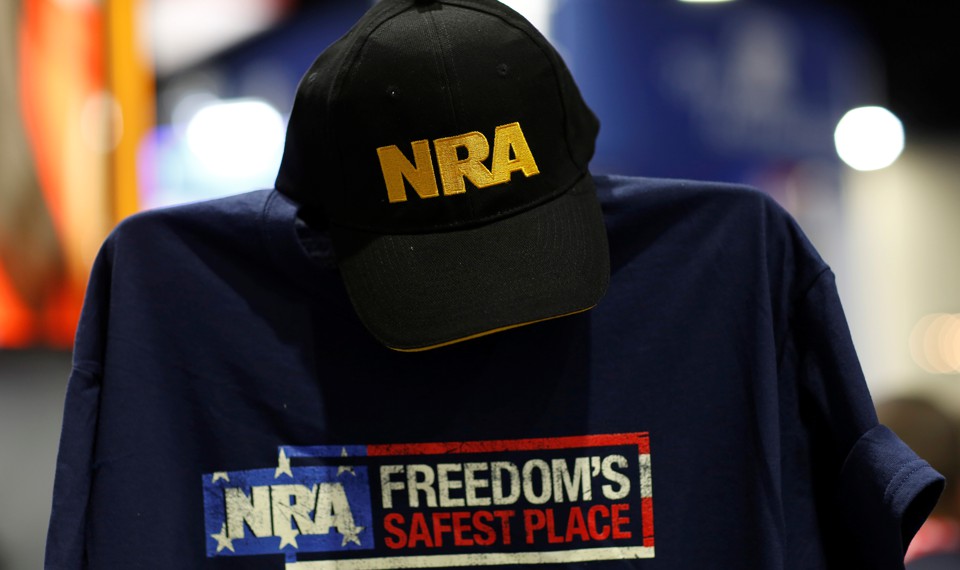
Wayne LaPierre is rarely accused of progressivism. But when Mr. LaPierre, the leader of the National Rifle Association, addressed the Conservative Political Action Conference last week, he invoked the Second Amendment in much the same way that a significant portion of the left has long spoken of the rights it values. According to this conception, rights are zones of personal autonomy where the individual owes no explanation and the community has no jurisdiction. This manner of thinking about rights is a serious barrier to reasonable regulations of firearms. The N.R.A. ritually claims the mantle of the Constitution, but the American founders who framed it had a far richer view in which individual rights were subject to considerations of the common good.
There may be good reasons not to regulate firearms further, but the individual’s absolute claim that his or her guns are nobody’s business is not one of them. To even make this assertion is an illustration of what the legal scholar and diplomat Mary Ann Glendon calls “the illusion of absoluteness,” an idea that is hostile to the possibility of political community. All rights have limits. The question is who determines them. For the framers of the Constitution, the answer was that the people do.
One of the earliest American assertions of rights, the 1641 Massachusetts Body of Liberties, delineated rights against everything from banishment to dismemberment but subjected them to regulation by the legislature. The community could take these actions only according to rules known in advance and equally applicable to all. The essence of rights in this early understanding was the rule of law — as propounded by the community — not the isolation of the individual.
The Declaration of Independence, whose “unalienable rights” individualists are so quick to claim for themselves, dealt with rights similarly. In legal parlance, to “alienate” something is to exchange it for an equivalent — precisely what individuals do with their rights when they form a political community. The Declaration’s rights are coherently “unalienable” only if they are possessed by what the document calls “one people.” This interpretation is backed by the fact that many of the complaints against King George that the document proceeds to enumerate are not that he did something absolutely forbidden but rather that he did so without the legislature’s consent.
In one of his cheaper applause lines, Mr. LaPierre cut to the heart of this issue: “We, the people, are in charge of this country,” he declared. But polls show that the people overwhelmingly support more restrictions on guns. As Randy E. Barnett, a constitutional theorist whose conception of individual liberty animated the legal challenge to the Affordable Care Act, has written, everything hinges on whether “we the people” refers to a community or a collection of individuals. Mr. Barnett concludes the latter, as apparently does Mr. LaPierre, who went on to repeatedly invoke “individual rights” as the essence of the American republic.
Photo
Photographs of National Rifle Association (NRA) spokesperson Dana Loesch (L) and NRA executive vice president and CEO Wayne LaPierre (R) hang at the 45th annual Conservative Political Action Conference.CreditJim Lo Scalzo/European Pressphoto Agency 
In this, they differ from James Madison, the man behind the Bill of Rights. Introducing his amendments to Congress with the lukewarm remark that they were not “altogether useless,” Madison cast them as a protection for the people against the encroachments of the government, not as a means of preventing the majority of the people from acting on its understanding of the public good.
Continue reading the main story
On the contrary, Madison specifically rued the fact that his amendments would not prevent the majority from abusing the minority. Madison thought the Bill of Rights might help discourage the community from abusing political minorities, but he did not see it as a legal barrier to majority decisions. Instead, Madison wrote that in situations in which political minorities were aggrieved, they were responsible for persuading the majority of their views and had to acquiesce if they failed. Alexander Hamilton argued that the Constitution’s invocation of “we the people” better protected what he suggestively called “popular rights” than their formal recitation in a Bill of Rights.
Far from being absolute, the Second Amendment is perhaps the clearest example of the Constitution situating rights in the context of the public good. It refers to the right of “the people” to keep and bear arms because the framers of the Constitution preferred state militias to a standing national army. The public context of the right is similar to the difference between the Constitution protecting the capacity of speech, which would allow the proverbial cry of “fire” in a crowded theater, and the First Amendment’s reference to “freedom” of speech. The latter is a legal concept that incorporates the possibility of limits.
This political conception of rights — that they can be adjusted for the public good, subject to the rule of law — largely prevailed until the courts began understanding rights as instruments of individual fulfillment and desire. The inevitable result was what the conservative political philosopher Harvey C. Mansfield has called the belief that “no right is safe unless it can be carried to an extreme.”
In this sense, Mr. LaPierre’s rights rhetoric has far more in common with the political opponents whom he stigmatizes as socialists than he acknowledges. It is a staple of progressive rhetoric on individual rights that they must be protected at their outer limits lest exercises of freedom short of the extremes become threatened. Assertions of speech and press rights that would accord pornography nearly boundless First Amendment protection lest the nation tumble down the slippery slope to political censorship partake of this tendency. So does the ever-expanding right to privacy, support for which often takes the form of arguing that if the government is allowed to restrict one activity, it will be similarly empowered to regulate others.
This rigidly individualist understanding of rights is a bipartisan phenomenon. The insistence on an absolute interpretation of rights leads to the absurdity of all-or-nothing solutions like arming everyone, including classroom teachers, rather than regulating anyone. The slaughters at a high school in Florida, a church in Texas and a concert in Las Vegas suggest that the common good is not only an older standard for rights but also a better one.

Dr. Carson

I hope Dr. Carson will enjoy his new $31,00 dining room set since he seems to enjoy nice things at our expense like all of the Trump minions. I would like to think that if I had all the money in the world OR if I had our taxpayer money at my disposal like Carson I would NEVER spend that much for a dining room set. I can honestly say that I wasn't raised that way.