Monday, March 25, 2019

No Civil War?


No civil war coming: Believe it or not, political tribalism in America is overstated

Yes, political division in the Trump era can seem dire. But Americans are not as bitterly divided as they seem


67

SHARES

MATT GROSSMANN
MARCH 25, 2019 10:00AM (UTC)
This article was originally published by the Niskanen Center. Used by permission. 
Are Americans separated into two irreconcilable partisan sides that instinctively love their fellow Democrats or Republicans but hate those in the other camp? This view, increasingly popular since the 2016 election, can leave the impression that partisans are unmovable by facts and logic, that they no longer want to associate with anyone on the other side, or that they would readily follow their leaders into battle against fellow citizens.
It is not a total myth. There is a real rise in negative partisanship: partisans rate the other party less favorably, reporting increasingly cold feelings. But when answering questions about the parties, citizens are thinking more about elites like Presidents Trump or Obama than about voters such as their own relatives. Negative partisanship is more closely tied to dislike of politicians than voter groups, though perceptions of voters in the other party are also negative. Many dislike both parties’ leaders and just find their own party more tolerable than the opposition.
When asked to explain what they dislike about the other party, voters mention its leaders a lot more than its voters. Even when voters do think of politics as a conflict between social groups, they usually discuss what groups are likely to benefit from each party’s policies (most commonly, Democrats saying Republicans are out to help the rich or hurt the middle class) rather than their disdain for the other half of the country.
The other dramatic indicator driving concern is the increasing number of partisans saying they would not approve of a child marrying someone from the other party. But one study found that many people disapprove of marriages to people described as either Democrats or Republicans because they expect partisans of either stripe to talk too much about politics. People also may express dislike of the other side as a form of team fandom — and in fact, Yankees and Red Sox fans also sometimes voice disapproval of their child marrying a fan of the wrong team.
Findings of partisan bias, however, should not be dismissed as inconsequential; Americans show strong implicit and explicit biases that may cause discrimination. Party favoritism has real economic consequences even though it’s generally driven by the desire to help co-partisans, not hurt the opposition. (A small segment of each party does condone violence against the other party or at least expresses schadenfreude about injury to the other side.)
Even among those who otherwise support one of the two sides, however, there is also a long-term trend toward identifying as an “independent,” reducing political involvement among the least committed and leaving politics to the most rabid partisans. Those remaining Democrats or Republicans are now socially and ideologically sorted into the parties: Citizens’ partisanship now more often matches their racial, religious and ideological identities. Partisanship drives some people to become more like their fellow partisans, even changing their religious identities. Only the shrinking pool of partisans who do not fit their party’s social profile are resisting polarization.
Yet we may be too quick to think of all this as a consequence of social group attitudes. Overall, attitudes toward groups such as ethnicities are mostly improving or stable over time; it is attitudes toward institutions like Congress that are deteriorating. Dislike of the other party is linked to ideological disagreement, especially for those playing close attention. Citizens emotionally respond to politicians’ ideologies and policy positions as well as their party. Partisanship is linked to economic and social policy preferences and where people place themselves on an ideological spectrum, even if most Americans lack consistent ideological views.
Partisan dislike is not explained by increasingly liberal or conservative policy positions (even if it is linked to ideological group identification). Geographic polarization between localities and neighborhoods, however, means we encounter more people of our political persuasion, sometimes even more in the offline world than in social media.
Many Americans are still largely apolitical, but even disinterested citizens now recognize party differences on policy, ideology and group coalitions and pick the side consistent with their views. In fact, nonpartisan and disengaged voters now appreciate differences between the presidential candidates as well as the most partisan and engaged voters did in the 1970s; this clarity about where the parties stand — and who they stand for — has reduced the number of voters who have mixed views about each party, of those who remain undecided between the candidates, and of those who flip between supporting Democrats and Republicans. Voters are responding to real trends in elite politics: The two parties’ politicians and activists have been moving apart for decades, clarifying their views for voters.
Scholars recognize that elite trends have driven much of the public partisan change. Recent books like "Prius or Pickup?" and "Enchanted America," however, impart images of American voters as divided into personality-driven sects. Indeed, liberal Democrats and conservative Republicans increasingly give different answers to questions on base instincts or temperaments like openness to new experience, “authoritarian” parenting attitudes, rationalism, beliefs in a just world and racial resentment. But it is actually quite difficult to sort out which of these views is a precursor to — rather than a consequence of — politics. Many voter views are dependent on cues from party elites and media.
Personality-based approaches also do not explain racial minority politics well. White liberals are distinct from white conservatives in their views and reactions, but minority attachments to the Democratic Party are not explained by the same factors. Since racial minorities usually constitute 40 percent of the Democratic electorate, that makes for quite a blind spot in the personality approach to understanding one of the two major parties. The Democratic Party is a coalition of different social groups that ally for different reasons (including religious and sexual minorities and public sector workers as well as racial minorities), so it seems odd to consider it one “tribe” (and, of course, public assumptions about what makes a group “tribal” are largely stereotypes that do not match either indigenous people’s practices or humans’ evolutionary history).
A review of the research on rising animosity among Democrats and Republicans finds a lot of important and well-studied trends: Negative views of the out-party are rising and they are increasingly manifesting in nonpolitical interactions. But the public presentation of this research (or its interpretation by journalists) seems to have oversold the notion of political tribalism. Evidence of ideological sorting and political disillusionment -- awareness of disagreement, lack of cross-cutting views shared with the other side, dislike of politicians, a general aversion to public conflict -- is too often interpreted as evidence that Americans are disparaging of fellow citizens in the other party.
Americans’ social-group attitudes, ideological and policy predispositions, and partisan feelings interact and are increasingly lining up. We know we disagree, and we want our side to win. But most Americans are still capable of cross-partisan friendship and communication, and many are turned off by politics as a whole. Expect more heated discussions, but no impending civil war.

Our New Political Normal


“Trump Wins!”: The President, the Mueller Report, and Our New Political Normal

Whatever is next, it’s not impeachment—at least not on Russia charges.

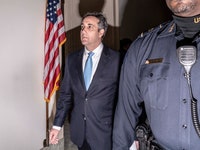
The most consequential weekend of Donald Trump’s Presidency started with that classic Washington event, a Friday-afternoon news dump. Just before 5 p.m., right after a portentous thunderstorm and amid apocalypse-like TV-news coverage, the Justice Department announced that the special counsel, Robert Mueller, had completed his report on Russia, Trump, and the 2016 election, after nearly two years. Soon afterward came a short letter from Attorney General William Barr to Congress, which disclosed none of the special counsel’s findings. But a strong hint of things to come quickly emerged with news that Mueller would not be issuing any further indictments, beyond the charges that Mueller had already successfully pursued against the President’s former campaign chairman, national-security adviser, and longtime political counsellor, among others.
Washington is a machine that thrives on new news, and those cases were old and already priced into the market. The end of the probe, with no further action, was new, and, whatever your politics, the reality of where this was headed now seemed apparent. Barely an hour later, the President’s allies began publicly claiming vindication. At 6:05 p.m., the Republican congressman Mark Meadows, a key Trump ally and the head of the G.O.P. Freedom Caucus, tweeted, “The Mueller report delivery suggests no more indictments are coming from the Special Counsel. If that’s true, it would mean we just completed 2 years of investigating ‘Russian collusion’ without one collusion related indictment. Not even one. Why? Because there was no collusion.” Soon after that, Trump’s former campaign manager Corey Lewandowski told PBS, “It’s clear vindication of what we already knew—that there was no collusion.” By later that evening, Trump’s previously Mueller-bashing allies on Capitol Hill—those who had so recently called to shut down the probe—now welcomed the report and urged that it be released as soon as possible. The “witch hunt” that Trump had been railing against was no more.
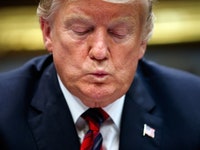
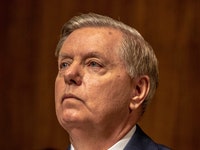
The emerging line from the White House’s defenders had an odd echo in the jitters of Trump critics, who also sensed which way the report was going. On Friday, Politico’s Playbook opened a day full of waiting (and waiting and waiting) with a telling item: “Several top Democratic lawmakers and aides tell us privately that they are certain the report will be a dud.” The news that evening that Mueller was closing up shop seemed to confirm it. The nervousness grew palpable, mixed in with heavy doses of sanctimony from across the aisle: the system worked! Isn’t it a good thing for the country if the President was not secretly conspiring with Russia to rig the U.S. election? Trump, meanwhile, spent Sunday morning golfing at Mar-a-Lago with the Republican chairman of the Senate Judiciary Committee, his critic turned confidant Lindsey Graham, as the President’s lawyer, Rudolph Giuliani, reported him to be “in a remarkably good mood.”
Whether Trump already knew what was coming or not, he didn’t have much longer to wait. By Sunday afternoon, minutes after Barr delivered a four-page letter to congressional leaders summarizing Mueller’s findings, Trump proclaimed on camera his “complete and total exoneration.” In a strictly narrow sense, Trump’s bald assertion was not accurate. Indeed, Barr’s letter, which he released right before Trump made his statement, had quoted Mueller as saying, quite explicitly, something else entirely; in regard to obstruction of justice, Mueller wrote, “while this report does not conclude that the President committed a crime, it also does not exonerate him.”
As a political statement, however, the President’s words were more true than not, given that Mueller did not establish, after nearly two years of investigation, that Trump or his campaign conspired with Russia. The President had insisted over and over and over again on “No Collusion!” Now Mueller agreed. “Trump Wins!” a banner on the pro-Trump Drudge Report read.
The reality, of course, is a bit more complicated—it always is with Trump. You could say that the weekend largely ended as it started. No one except Barr and a small handful of his aides has read the Mueller report. Trump has overreached in his victory statement. Democrats are demanding the release of the report before accepting its conclusions. Serious allegations about the President’s alleged obstruction of justice remain. An epic fight over what Congress can see of Mueller’s work is all but inevitable. The country is divided. And we still have no idea why Donald Trump seems to like Vladimir Putin so much.
But we do know something far more definitively now than we did at five o’clock on Friday afternoon, and it is big. It’s now clear that Trump’s impeachment and removal from office, at least on charges stemming from Mueller’s investigation, are not going to happen.
For more than two years, Washington has been stuck in the miasmic sinkhole of a Presidency enabled and compromised and surrounded by crooks and liars, and with no easy way to do anything about it. The Constitution does not stipulate that the President has to be a good person, or that his associates must refrain from mendacity or criminality. Impeachment and removal from office is the only way to force accountability on the President, and that has always been the longest of long shots in Trump’s case, no matter what Mueller found. The Senate is solidly in the hands of the President’s Republican allies, and might not have voted to remove him even if Mueller’s report had turned out differently.

VIDEO FROM THE NEW YORKER

The Cohen Hearing in Three Minutes

All such investigations of the President, in the end, are about the same thing. They are, in the memorable framing of the late Senate Republican Leader Howard Baker, about “what did the President know, and when did he know it?” In Watergate, the answer turned out to be, unequivocally, just about everything, from beginning to end; there were even tapes to prove it, which is why Richard Nixon had to leave office. With the Iran-Contra affair, a decade later, Ronald Reagan was never conclusively blamed for his Administration’s scheme to bypass Congress and illegally sell arms to the Contras, because it was never clear just how much he knew about the plot that was hatched and carried out in his White House.
In the case of Trump, Mueller was asked to answer the sensational but relatively narrow question of whether this President or his campaign actively conspired with Putin’s Russia to help him win the election. The other wrongdoings that Mueller turned up were significant—most notably, Trump’s former campaign chairman Paul Manafort scheming to evade millions of dollars in taxes and lying to evade federal lobbying laws—but never went to the question of Trump’s own actions. The report may well contain much more about Trump himself; we just don’t know yet, beyond the broad conclusions that Trump’s own Justice Department has put out. The fact that Mueller explicitly refused to exonerate Trump of obstructing the investigation suggests that there is much more for Congress and the public to learn.
Yet that information, even if it is damning, will not change the single, seemingly straightforward fact of Mueller’s core finding: no conspiracy with Russia. Trump cheered the Russian hacking of his Democratic opponent; he seemed to publicly beg Putin to carry it out. But, according to Barr’s summary of Mueller, he did not make it happen. “Can you obstruct a witch hunt?” Rich Lowry, the editor of the conservative National Review, asked Sunday night. The answer may still be yes, but there is no one who believes that, without an underlying high crime and misdemeanor, Congress would take the unprecedented step of removing a President from office.
The worry now is that the country is too fragmented ever to agree on a single narrative anyway. Trump has spent the better part of two years trashing Mueller, in a bid to destroy the credibility of whatever conclusions he produces; Democrats built Mueller up. Both sides now crave a definitive resolution that will never be achieved. This episode of the Trump Show seems doomed to end in a much-argued-about cliffhanger.
One lesson of the Trump era, whenever it is finally over, will be that absolutely nothing is absolutely clear anymore. The end of the Mueller investigation should have been unambiguously good news for the President and the country. That it was instead confusing, partisan, uncertain, and guaranteed to be fought over for months and years to come is hardly surprising. It is our new normal.
  • Susan B. Glasser is a staff writer at The New Yorker, where she writes a weekly column on life in Trump’s Washington.
    Read more »