Sunday, September 20, 2026

 THE WONDER READER

The Wisdom of Uncertainty

Why accepting what we don’t know can change how we see the world

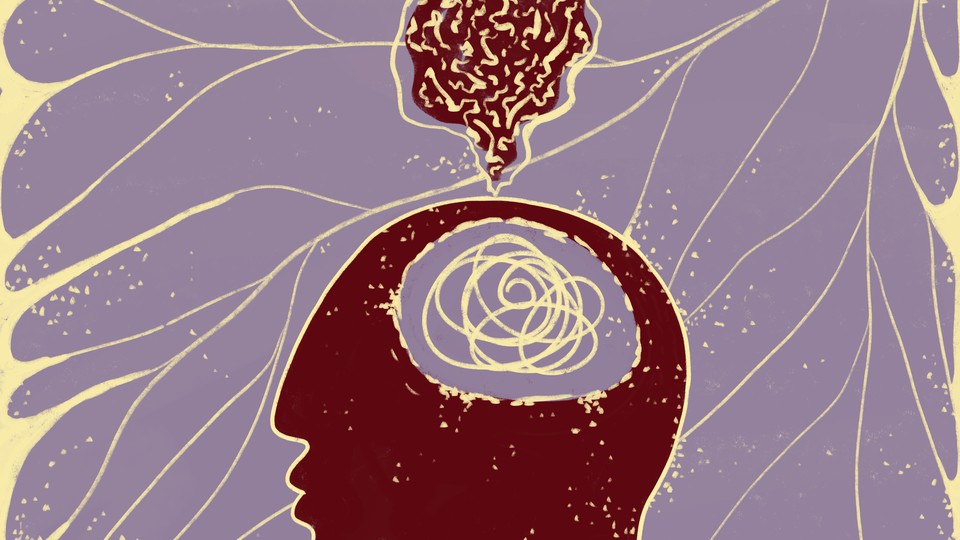
Abstract brain with a thought bubble
Elena Medvedeva / Getty

This is an edition of The Wonder Reader, a newsletter in which our editors recommend a set of stories to spark your curiosity and fill you with delight. Sign up here to get it every Saturday morning.

How comfortable are you with saying, “I don’t know”? Most of us spend our lives trying to know more. We look things up, seek expert advice, and gather information before making decisions. In many cases when we disagree with someone, we assume that if we could just establish the facts, one of us would turn out to be right. We accumulate knowledge until, we hope, the uncertainty disappears.

But what if uncertainty never fully goes away? In a recent Atlantic essay, the physicist Carlo Rovelli argues that modern science complicates the idea that we can ever arrive at a completely objective description of reality. Even physics suggests that what we see can depend on the relationship between the observer and what they’re looking at. We are not standing outside the world looking in, Rovelli writes. We are part of the world we are trying to understand.

That doesn’t mean that facts don’t exist or that knowledge is useless. Rovelli points out that we make decisions without absolute certainty all the time, and science works much the same way: It can give us extraordinarily reliable knowledge without perfect certainty. The same idea can be freeing in everyday life: We can hold convictions without assuming that our understanding is complete, and approach other perspectives with curiosity rather than immediately dismissing them. Today’s newsletter explores the value of leaving room for uncertainty.

On Valuing Uncertainty

The Myth of Perfect Knowledge

By Carlo Rovelli

Science will never be able to give a completely objective description of the world. That should make us humbler—and wiser.

Read the article.

How to Have a ‘Don’t-Know Mind’

By Michael Pollan

My quest to understand consciousness took me to a cave in New Mexico and then deep into the cosmos.

Read the article.

The Truth Physics Can No Longer Ignore

By Adam Frank

The fundamental nature of living things challenges assumptions that physicists have held for centuries. (From 2025)

Read the article.


Still Curious?


Other Diversions


PS

Mount St. Helens in Washington state
Courtesy of Nick G.

My colleague Isabel Fattal recently asked readers to share a photo of something that sparks their sense of awe in the world. Nick G. shared a photo from “the volcanic blast zone of Mount St. Helens in Washington State during a summer sunrise.”

We’ll continue to feature your responses in the coming weeks.

— Rafaela

Saturday, September 19, 2026

The Florida Game

 Florida is maybe a 2 pt favorite.

Auburn receives,  On third down Brown throws an interception.  Florida goes 41 yds and a 2 yd rush for the score after 2 big penalties against Auburn

 Not a good start.

Auburn 0 Florida 7

Auburn punts.  Interception Auburn on the Florida 8.  But the offense goes straight backwards to the 21.  Settle for a FG.  This game is not starting well.  Our offense hasn't showed up yet.

Auburn 3 Florida 7

Penalty-laden first quarter.  Ten penalties on the two teams combined as the quarter ends.

Auburn 3 Florida 7

Seems like the Gators are the better team so far.

SECOND QUARTER

Third and goal for the Gators from their 20 and a run for a score.  Auburn is losing this game no offense and not wrapping up on defense.

Auburn 3 Florida 14

The Tigers drive 75 yards in 8 plays for the TD.  Finally good offense.

Auburn 10 Florida 14

But Florida drives to the Auburn 13 and third & 5 from the 8. as the half winds downThe Gators are big and physical.

We hold them go a FG.

Auburn 10 Florida 17

Clutch drive by the Tigers.  In the first quarter Auburn had minus 3 yds offense.  Now the offense has come alive in the second stanza.  Long pass completion to the Gator 21, TD pass on third down at the 4 and we are TIED.

Auburn 17 Florida 17

5:21 in the half.  

At the 2 minute stoppage UF is at the Auburn 28.  Hard to stop their varied offense.

Penultimate play of the half UF kicks a FG.

HALF

Auburn 17 Florida 20

A slugfest.

SECONF HALF

Florida pulls away.  It was never to be for the Tigers.


Sunday, September 13, 2026


George Petrie

George Petrie (1866-1947) was a historian, college professor, and coach of Auburn University's first footballteam. In addition to introducing football to what was then the Agricultural and Mechanical College of Alabama, Petrie brought innovative methods of teaching history to the university, founded the university's graduate school, and mentored students who went on to become renowned historians.

Auburn University history professor George Petrie in 1925George Petrie, 1925Born in Montgomery, Montgomery County, on April 10, 1866, to George Laurens Petrie and Mary Jane Cooper Petrie, George Petrie was the descendant of prominent families from South Carolina and Georgia. Both his grandfather, George Hollinshead Whitefield Petrie, and father were Presbyterian ministers. Petrie's grandfather was pastor of the First Presbyterian Church in Montgomery from 1857 to 1885. After living in Montgomery and Greenville, Butler County, Petrie moved, in 1872, with his parents to Petersburg, Virginia, where his father became minister of the Second Presbyterian Church. In 1878, the elder Petrie accepted a position as pastor of the First Presbyterian Church in Charlottesville, Virginia.

Petrie entered the University of Virginia in 1883 and graduated with a bachelor of arts degree in 1886, then received a master of arts degree there in 1887. Most of his studies focused on languages, especially Latin, Greek, French, and German, and moral and natural philosophy. He likely saw his first college football game while at Virginia. In June 1887, Petrie took a position teaching modern languages and history at the Agricultural and Mechanical College of Alabama. After two years in Auburn, Petrie resigned in June 1889 and entered Johns Hopkins University in Baltimore, Maryland, where he planned to earn a Ph.D. in modern languages.

By his second year at Hopkins, however, Petrie had changed his major and began working on his doctorate in history. Johns Hopkins University was one of the first universities in the United States to adopt the German model of "scientific" scholarship. "Scientific history" emphasized the use of visiting lecturers who were experts in their fields, the analysis of primary sources, and the seminar, which emphasized class discussion and debate, as well as the writing of in-depth research papers.

George Petrie with Auburn University cadets and facultyGeorge Petrie with AU Cadets and Faculty, 1890Petrie completed his Ph.D. in the spring of 1891, a year short of the usual time requirement at Johns Hopkins University. By June 1891, he had accepted a position as a professor of History and Latin at the Agricultural and Mechanical College of Alabama and returned to Auburn. Petrie was determined to teach history as he had learned it at Johns Hopkins, a very different model from what was generally used at universities in the South. He encouraged his students to travel across the South to find original source material and also exposed his students to the latest scholarship by inviting some of the nation's best-known historians from other universities to come to Auburn to lecture.

Also while a graduate student at Johns Hopkins, Petrie had grown to love the new sport of football that was sweeping the northern part of the nation in the late nineteenth century. Shortly after he returned to Auburn, in 1891, Petrie organized and coached the college's first football team. The school played its first game, held in Atlanta, Georgia, against the University of Georgia on February 20, 1892, defeating Georgia 10 to 0. The Agricultural and Mechanical College played a total of four football games that first season and amassed a record of two wins and two losses. In December 1892, before the college's second football season began in the winter of 1893, Petrie resigned as coach, citing his teaching and professorial duties as the reason.

George Petrie's classroom at Auburn UniversityGeorge Petrie's Classroom, 1893In addition to his academic and athletic pursuits, Petrie also became active in the Auburn community as a member of the local literary society, The Auburn Conversation Club, and as an enthusiastic bicyclist. On August 30, 1893, he married Mary Barkwell Lane, daughter of engineering professor and former Confederate general James Henry Lane. The couple had one child, Mary Cooper Petrie, who was born May 1, 1900, but lived just a little over a year, dying on June 30, 1901.

During his career, Petrie also sought to preserve historical documents and, as a result, forged friendships with professional and amateur historians throughout the state. Petrie helped Thomas M. Owen establish the Alabama Department of Archives and History in 1901, the first state archives in the nation. In addition, he actively participated in the Alabama Historical Society, a predecessor of the current Alabama Historical Association, and founded the Alabama Polytechnic Institute Historical Society (the school had changed names in 1899), which gave students more opportunities to do original research. Petrie also prepared many students for graduate study at prestigious universities such as Harvard, Columbia, and Johns Hopkins. His students included Walter L. Fleming, Frank L. Owsley, and Herman Clarence Nixon, who each became well-known historians.

Auburn University history professor George Petrie in 1905George Petrie, 1905Petrie was a meticulous researcher, but he published very little. His most significant contribution to the historical profession was in the field of historiography, where his innovative research methods and quest for quantitative history led him to conduct pioneering work. From 1907 through 1913, he and some of his students mailed a questionnaire to and conducted oral interviews with hundreds of former enslaved people, white slave owners, and nonslaveholding whites throughout the state. Petrie was one of the first professional historians to examine the daily lives of the enslaved, from where they lived to what they ate and how they worked, as well as their attitudes toward slavery and free Blacks. His method was groundbreaking at the time because most white historians dismissed former slave accounts, believing that they were not as reliable as accounts from white people. He knew in 1907 what most other historians would not realize until the 1970s: in order to understand the history of slavery, scholars needed to study the enslaved themselves.

Auburn professor George Petrie and John Hodges DrakeGeorge Petrie and John Hodges DrakeIn 1908, Petrie was appointed Dean of the Academic Faculty. When a full graduate program was established in 1922, he became Dean of the Graduate School while at the same time remaining chair of History and Latin and teaching a full load of courses. In 1926, when radio station WAPI began broadcasting from the Auburn campus, Petrie began hosting his own radio program on history and current events.

George Petrie served as a professor and administrator at Auburn for 53 years, until poor health forced him to retire in August 1942. His wife, Mary, died on July 13, 1942, soon after Petrie's retirement. In November 1943, he wrote "The Auburn Creed," in which he encapsulated the college's "spirit." George Petrie died on September 5, 1947, at age 81; he is buried beside his wife in Pine Hill Cemetery in Auburn.

Additional Resources

  • Donaldson, Anthony. "The Father of Alabama Historians: Professor George Petrie and His Survey of Slavery." Alabama Review 62 (January 2009): 37-58.
  • Jernigan, Mike. Auburn Man: The Life and Times of George Petrie. Montgomery, Ala.: The Donnell Group, 2007.
  • Mattson, Brenda Harper. "George Petrie: The Early Years, 1866-1892." Master's thesis, Auburn University, 1983.
  • Rea, Robert R. History at Auburn: The First One Hundred Years of the Auburn University History Department. Auburn, Ala.: Auburn University Department of History, 1991.

Saturday, September 12, 2026

The Southern Miss Game

 Home opener.  Auburn a big favorite.  Game has a 55 minute lightening delay.  Scheduled kickoff was 6:45.

FIRST  QUARTER

After a false start on the first play from scrimmage the Tigers intercept for a Pick Six.  Defense scores on the first play.  Auburn's fastest score ever to open a game in history in 10 seconds.   Andre Jordan, Jr.

Auburn 7 SM 0

SM goes three and out.  A Byrum Brown run of 52 yd run for a touchdown is negated by a holding penalty.  Otherwise our offense is nonexistent.  SM starts on their 19 after the punt.

Second Golden Eagle possession moves out to their 42 from their 9.  To the Auburn 45 but called back by penalty to the SM 40.  SM is punting to inside our 10.

Lots of messy 5-yd penalties starting this game.

Tigers get it going and with 3:45 left in the first a 20 yd TD pass.  Tacky but okay, 93 yds 8 plays.

Auburn 14 SM 0

From their 34 SM goes for it 2:26 left in the first with a yd and a half to go.  Andres Jordan has his 2nd pick at the SM 41.

To the SM 31.  TD pass to the end zone but the play is reviewed.  Great throw & catch but the call is overturned.  From the 29 incompletion.

Auburn 17 SM 0

First quarter winding down.

SM to their 40 as the quarter ends.

END OF FIRST QUARTER

AUBURN 17 SM 0

SECOND QUARTER

SM at their 40.

SM now punting after 3 plays from their 40. 

Auburn from their 32.

After one first down the Tigers are punting.

Poor punt to the SM 20.  Three downs and out.

9:48 to go as Auburn regains possession.

From our 15 the Tigers go the distance.  The key play is a 45 completion to the SM 15.  On fourth and three to end zone for the score.  85 yards 8 plays  8 yd TD pass,  Luck of the 8;s.  6:40 left.

Auburn 24 SM 0

The Golden Eagles have a play to inside the Auburn one but a foolish penalty moved the ball back to the 16.

Third and goal from the 5.  Holding by Auburn at the goal line.  First & goal SM from the Auburn 2. 45 seconds and counting   TD pass.

15 plays 75 yds. 

2-pt conversion.  

Tigers move quickly upfield and McPherson hits a 55 yd FG with 3 seconds on the clock.

HALFTIME

Auburn 27 SM 8

THIRD QUARTER

Having deferred to start the game the Tigers drive to the end zone with the qb as the receiver and with 9:48 in the third it's

Auburn 34 - 8

SM goes 3 and out and Auburn drives deftly mixing the run and the pass but alas Cobb fumbles the ball forward to the 3 and the Golden Eagles take the ball inside their 5.

Safety on SM.

Auburn 36 SM 8

After the safety punt Auburn on their 36.

23 yd gain.

All Auburn so far in the second half.

First and goal Auburn.

TD Madsen 3 yds for the score.

Aubur 43 SM 8

END OF YHIRD QUARTER 

AUBURN 43 SM 8

Auburn completely dominant.  The offense we've been waiting to see combined with a defense we saw in the first game.  Florida next.

FOURTH QUARTER


I sure could use that $5000 Republican bonus. Somehow I never got my 2000 Republican tariff refund and my $5000 DOGE refund. Did you receive yours?
Shared post

 Just drove thru Chick-Fil-A, Republican Central in Pelham. Disappointed I didn't see anymore there wearing dipers on the outside of their pants in the parking lot in support of their fearless leader. So disappointed. But I bet they gonna mob CFA once they git that $5000 check from the POTUS.

Thursday, September 10, 2026

 IDEAS

Does Trump Want Republicans to Win the Midterms?

Traditionally, candidates try to distance themselves from unpopular presidents. But this year, that’s impossible.

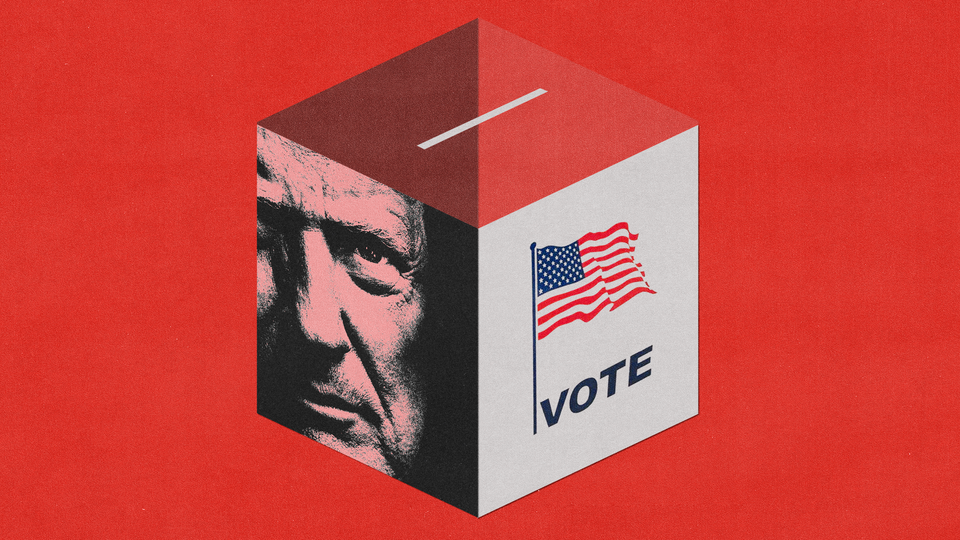
An illustration of a ballot box with an image of Donald Trump's face on the side of it
Illustration by The Atlantic. Source: The White House.

Is Donald Trump trying to help Republicans win the midterm elections? The obvious answer to this question is yes, of course, simply because all political leaders benefit from their party winning elections. Yet several of Trump’s actions throw this normally perfunctory question into at least some doubt.

Traditionally, candidates laboring under the burden of an unpopular president seek to detach themselves from the national brand. Trump is making this impossible. He has launched a national ad campaign focused on himself, and thrown a high-profile “midterm convention” designed to further reinforce the synonymity of the party and its leader. Trump has also made several remarks that convey an emotional detachment from the election’s outcome—comments such as “I’m not affected by the election” or “I don’t care about the midterms.”

Perhaps he is merely feigning indifference. Maybe he truly does not care. More likely, Trump cares about the outcome, but not enough to permit Republicans to acknowledge his lack of popularity. His approach, at any rate, nicely illustrates the drawbacks of handing total control of a political party to an egomaniac.

Midterm elections have historically disfavored the president’s party. Candidates for office who are running in neutral or hostile territory accordingly tend to emphasize their differences with the president—think of Joe Manchin running an ad in West Virginia in 2010 showing him firing an actual bullet at Barack Obama’s cap-and-trade bill, or the Republican Will Hurd in 2018 criticizing Trump’s racism and affinity for Russia.

Trump’s public standing is unusually dire. He is currently polling far worse than either he did at this point in 2018 or Joe Biden did four years ago. In theory, this ought to give Republicans an especially strong incentive to edge away from Trump and emphasize local themes in their elections.

Trump has decided to block this escape route. He is commandeering earned media with his “Trumpapalooza” show, drawing attention to the person endangered Republicans desperately need their constituents to forget. He has hoarded the party’s ad budget, warning Republicans, “This is my money that I control,” and that he would spend it on “Republicans that I think are good,” which is to say, slavishly loyal. He has promised to barnstorm the country, telling reporters, “I’ll be making a lot of stops,” including in Alaska, where the Republican Dan Sullivan is trailing.

There is an old Simpsons episode in which the elderly oligarch Montgomery Burns informs the obsequious Smithers that, upon his own death, his loyal aide will be buried alive at his boss’s feet. Trump appears to be thinking along similar lines.

This self-defeating behavior makes a degree of sense if you accept that Trump’s interest in politics is purely egocentric. He has difficulty caring about anything that does not directly involve himself, and the prospect of Republicans holding seats by repudiating his record is likely unpalatable.

The benefits of same-party control of Congress are also smaller for Trump than other presidents, because he governs mainly through executive action. To the extent that a Democratic majority in either chamber might threaten him with oversight, he will surely disregard it, as he did during his first term. Although he finds Republican majorities preferable, the size of those majorities matters to him far less than their composition—a fully loyal minority may seem preferable to a fractious majority.

What makes less sense is the willingness of many Republicans to cooperate with a strategy that consigns many of them to defeat.

Consider, for instance, Mike Rogers, the Republican Senate candidate in Michigan. Rogers came up through politics long before Trump entered it, and is trying to win office in a state where the president’s approval rating is 25 points underwater. A recent poll of the state found Trump’s endorsement made voters less likely, by a 55 percent to 27 percent margin, to support a candidate. Yet Rogers has opened no daylight whatsoever with the unpopular president, even echoing his false claims of having the 2020 election stolen from him. When Trump launched a trade war with Canada, a move that poses an especially dire threat to Rogers’s own state, he declined to take the opportunity to display independence. Instead, he issued a statement mumbling his approval. (“President Trump is right to put America First—and tariffs are necessary, but are not a one-size-fits-all solution.”) The same dynamic is occurring in other races, where Trump is throwing himself behind incumbents who are in danger mainly because voters don’t like him.

To be sure, some Republicans subscribe to the theory that the Trump era has suspended normal midterm election dynamics. According to this account, a decisive sliver of voters are loyal to Trump, and not his party. Republicans can win only by enticing them to vote, which means making the election about their hero. “We’ve seen that a lot of Trump voters—they will crawl over glass to vote for the president,” one Republican strategist explained to Politico.

Yet Trump has tried before to insert himself into non-presidential elections. And his efforts have mostly failed—not only in the 2018 midterms, when he refused to lie low, but also in multiple off-schedule elections (the most famous case being Georgia’s 2021 Senate runoff, which he made into a referendum on his effort to overturn the 2020 election). In the Trump era, his party has fared well only when it has been able to focus on the shortcomings of unpopular Democratic opponents, such as Hillary Clinton in 2016 and Biden and Kamala Harris in 2024. Making elections about Trump—which also occurred when he ran for reelection in 2020—has been a losing gambit.

The political tip sheets in recent days have been filled with the lamentations of fatalistic Republican operatives. “We have no choice. We’re stuck on the boat with him whether we like it or not,” a top Republican campaign official confessed to Axios. They cannot stop Trump from staging Trumpapalooza, so they are reduced to praying for low ratings. “My only hope is that no one watches it since it’s competing versus NFL opening games,” a person close to the White House told Politico. “Hopefully nobody notices the embarrassing show.” Republicans are cooperating in a strategy that sacrifices their best chance of political survival, because the past decade has trained them to believe that resistance to Trump is futile.

Trump did far less damage to the country during his first term, both because institutions and norm-following officials restrained him, and because his pathological instincts frequently undermined his support. The former limitation has broken down in the second term, but the latter one remains. Trump’s support has collapsed in large part because of his own poor choices.