What a difference a day makes. Yesterday I was sad and unconsolable. Today I am merely dizzy and confused. Yesterday I saw the human race going down for the count. Today I am at least reconsidering my position from yesterday but no promises. Yesterday you were there and I was here. Today you are here and I am there. Maybe not progress, but at least some movement.
Thursday, March 16, 2023
Woke is the Republicans Favorite Word but They Can't Define It'
"Woke" is currently the favorite word of the right. Republican politicians can't go more that 5 or 6 words without peppering "woke" into their sentences. Turning on Fox News, you'll hear the word "woke" repeated ad nauseam, like a record skipping, but for hours at a time: "woke woke woke woke woke." Everything is "woke": Banks. Children's books. The military. Disney. M&Ms. Super Bowl performances. To be a Republican in the year 2023 is to spend every waking moment outraged and terrified by "woke," certain its wokey tendrils will snake their wokeness into your brain and woke-ify you into wokeitude.
But the funny thing about "woke" is that, while all Republicans hate it, they don't seem to have any idea how to define it. That was hilariously demonstrated in a viral video clip of conservative author Bethany Mandel falling completely apart when asked in an interview to define "woke," a concept she wrote an entire book denouncing. Mandel couldn't do it.
-Amanda Marcotte in Salon.comTuesday, March 14, 2023
I Laugh
I laugh when I hear white people talk about people of color playing "the race card." In this country founded on pure white supremacy and settler colonialism white people have been playing the race card since 1619. The white race card was baked into the Constitution from the beginning, loosened only with the passage of the post-Civil War Amendments. Multiracial democracy is still a goal, not a total reality. If you are opposed to multiracial democracy, just be honest and say so.
Jason Stanley: Not a Culture War but Straight-Out Fascism
A wave of Republican enthusiasm for banning concepts, authors and books is sweeping across the United States. Forty-four states have proposed bans on the teaching of “divisive concepts”, and 18 states have passed them.
Florida’s Stop Woke Act bans the teaching of eight categories of concepts, including concepts that suggest that “a person, by virtue of his or her race, color, sex, or national origin, bears personal responsibility for and must feel guilt, anguish or other forms of psychological distress because of actions, in which the person played no part, committed in the past by other members of the same race, color, national origin, or sex”. Many of the laws also target Nikole Hannah-Jones’s influential 1619 Project.
These laws have already started to take effect. Administrators and teachers have been forced out of their positions on the suspicion of violating these laws, and what has started as a trickle may soon become a flood.
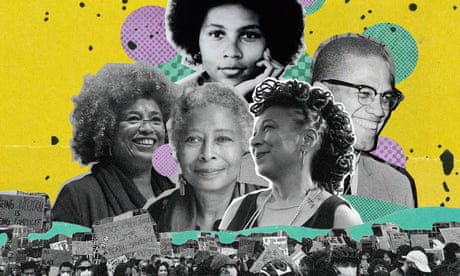
In January, Florida’s board of education banned AP African American studies, on the grounds that it included concepts forbidden by Governor Ron DeSantis’s law, including critical race theory and intersectionality, as well as authors such as Kimberlé Crenshaw, bell hooks, Roderick Ferguson, Angela Davis and Ta-Nehisi Coates. The College Board chose to remove these authors and subjects from its curriculum, claiming, as it turns out dubiously, that it did so independently of Florida’s pressure.
These laws have been represented by many as a “culture war”. This framing is a dangerous falsification of reality. A culture war is a conflict of values between different groups. In a diverse, pluralistic democracy, one should expect frequent conflicts. Yet laws criminalizing educators’ speech are no such thing – unlike a culture war, the GOP’s recent turn has no place in a democracy. To understand why, consider their consequences.
The concepts these laws centrally target include addressing structural racism, intersectionality and critical race theory.
Structural racism is the view that certain persisting structures and practices have resulted in unjust racial outcomes, for example the American racial wealth gap, where Black Americans have 10% of the wealth of white Americans.
Intersectionality, introduced by Kimberlé Crenshaw in widely cited and impactful work, is the concept that certain groups are at the intersection of multiple oppressions – for example, Black women face discrimination not just for their race but also for their gender (and that such discrimination takes its own unique form).
Finally, critical race theory is, in essence, the study of these concepts: the ways practices in various domains – in housing, schooling, banking, policing, and the criminal legal system – entrench persisting racial disparities and inequalities (such as the racial wealth gap, or segregated schools), even when there is no individual racist intent.
The laws are manifestly incoherent. The failure to teach about structural racism will make Black children born into poverty feel that their parents and grandparents are responsible for their own impoverished position relative to white children, and so will make Black children feel “anguish or other forms of psychological distress” because of “actions … committed in the past by other members of the same race”. The “anguish” and “psychological distress” these laws forbid are only anguish felt by the dominant racial group, white Americans.
In other national contexts, everyone would clearly recognize the problematic nature of laws of this sort. Germany’s teaching of its Nazi past creates clear anguish and guilt in German children (and perhaps for this reason, Germany is the world’s most stable liberal democracy). If the German far right passed laws forbidding schools from teaching about the sins of Nazism, on the grounds that such teaching does in fact quite obviously cause anguish and guilt in German children, the world would not stand for it for one moment. Even Israel’s far-right government strenuously objected when Poland drafted a law that would make it illegal to suggest that Poland had any responsibility for Nazi atrocities on its soil. Why isn’t there greater outcry when such laws are passed to protect the innocence of white Americans?
It is frequently claimed by proponents of such laws that banning discussion of structural racism and intersectionality is freeing schools of indoctrination. And yet indoctrination rarely takes place by allowing the free flow of ideas. Indoctrination instead rather takes places by banning ideas. Celebrating the banning of authors and concepts as “freedom from indoctrination” is as Orwellian as politics gets.
So what is the ultimate goal of these bans? In the first instance, these laws are there to protect white innocence – that is why they are so popular with many white parents, who carry their own burdens of guilt (similar laws would be popular with many Germans, for the same reason). But there are deeper and more problematic aims of these laws.
Democracy involves informed decision-making about policy. These laws are intended to render such deliberation impossible when it comes to minority groups. The United States suffers from immense racial disparities, which result in periodic outbreaks of political protest. Without an understanding of the structural factors that keep schools and cities segregated, and certain populations impoverished, Americans will not be able to react to these outbreaks with understanding – they will find them befuddling. These laws eliminate the knowledge and understanding required to react democratically to Black political protest to structural injustice.
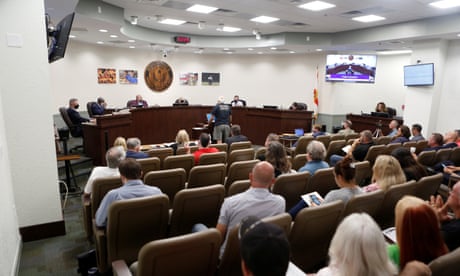
The authors targeted by these laws do not just theorize about problematic structures – their work is also essential for understanding solutions. For example, Roderick Ferguson writes about social movements for liberation, including student movements. These laws make it illegal to teach students about the history and strategy of social movements targeting structural injustice. More generally, these laws make it illegal to teach students about how to form social movements to challenge dominant interests and structures.
Most frighteningly, these laws are meant to intimidate educators, to punish them for speaking freely by threatening their jobs, their teaching licenses, and more. The passing of these laws signals the dawn of a new authoritarian age in the United States, where the state uses laws restricting speech to intimidate, bully and punish educators, forcing them to submit to the ideology of the dominant majority or lose their livelihoods, and even their freedom.
It is clear that the chief agenda of the GOP is to advance a set of speech laws that criminalize discussion in schools of anything but the white heterosexual majority’s perspective. The media’s portrayal of these laws as moves in the “culture wars” is an unconscionable misrepresentation of fascism.
I hope you appreciated this article. Before you move on, I was hoping you would consider taking the step of supporting the Guardian’s journalism.
From Elon Musk to Rupert Murdoch, a small number of billionaire owners have a powerful hold on so much of the information that reaches the public about what’s happening in the world. The Guardian is different. We have no billionaire owner or shareholders to consider. Our journalism is produced to serve the public interest – not profit motives.
And we avoid the trap that befalls much US media – the tendency, born of a desire to please all sides, to engage in false equivalence in the name of neutrality. While fairness guides everything we do, we know there is a right and a wrong position in the fight against racism and for reproductive justice. When we report on issues like the climate crisis, we’re not afraid to name who is responsible. And as a global news organization, we’re able to provide a fresh, outsider perspective on US politics – one so often missing from the insular American media bubble.
Around the world, readers can access the Guardian’s paywall-free journalism because of our unique reader-supported model. That’s because of people like you. Our readers keep us independent, beholden to no outside influence and accessible to everyone – whether they can afford to pay for news, or not.
Fascism on the Rise
Banning ideas and authors is not a ‘culture war’ – it’s fascism
America is not mired in a culture war. In reality, today's Republican Party and larger "conservative" movement are waging a fascist war against multiracial pluralist democracy and human freedom. Ultimately, to not understand how the so-called culture war is actually a fascist war against American democracy is to almost ensure being rolled over by those evil forces.
Many political observers point to Pat Buchanan's infamous 1992 speech at the GOP national convention as the beginning of the so-called culture war in America. However, the roots of this fascist and authoritarian campaign are much older: Jim and Jane Crow and white-on-black chattel slavery, genocide against First Nations peoples and white settler colonialism are America's native forms of fascism. When located in the proper historical context, neofascism and the Age of Trump are properly understood as being but the most current manifestation of much older birth defects in American democracy and society.
In a very important recent essay in the Guardian, Yale University philosophy professor Jason Stanley highlights how the Republican fascist thought crime laws in Florida and other parts of the country targeting the teaching of African-American history (and the country's real history more generally) are examples of a much larger Orwellian project:
These laws have been represented by many as a "culture war". This framing is a dangerous falsification of reality. A culture war is a conflict of values between different groups. In a diverse, pluralistic democracy, one should expect frequent conflicts. Yet laws criminalizing educators' speech are no such thing – unlike a culture war, the GOP's recent turn has no place in a democracy. To understand why, consider their consequences. [emphasis added].
Florida's Gov. Ron DeSantis and the other Republican-fascists are using the myth of American Exceptionalism and what sociologists describe as "the white racial frame" to erase the country's real history and its challenges and complexities to advance an anti-democracy project that eliminates critical thinking and free speech.
Monday, March 13, 2023
Senator Warren Explains
No one should be mistaken about what unfolded over the past few days in the U.S. banking system: These recent bank failures are the direct result of leaders in Washington weakening the financial rules.
In the aftermath of the 2008 financial crisis, Congress passed the Dodd-Frank Act to protect consumers and ensure that big banks could never again take down the economy and destroy millions of lives. Wall Street chief executives and their armies of lawyers and lobbyists hated this law. They spent millions trying to defeat it, and, when they lost, spent millions more trying to weaken it.
Greg Becker, the chief executive of Silicon Valley Bank, was one of the many high-powered executives who lobbied Congress to weaken the law. In 2018, the big banks won. With support from both parties, President Donald Trump signed a law to roll back critical parts of Dodd-Frank. Regulators, including the Federal Reserve chair Jerome Powell, then made a bad situation worse, letting financial institutions load up on risk.
-Senator Elizabeth Warren
Sunday, March 12, 2023
Harper Lee - To Kill a Mockingbird - Questions
Did ever explain the title? Atticus Finch says that it's a sin to kill a mockingbird, but he gives his kids permission to shoot at Blue Jays. Should it also be a sin to kill a Blue Jay? What did they ever do to deserve being shot at and mockingbirds not deserve to be shot at?
If it's a sin to kill a mockingbird, then does the title signify "to sin?"
Is the Tom Robinson case, the heart of the story, based on a real event in Lee's life or did she make it up entirely?
I always thought that Boo killed Ewing, but apparently Ewell fell on his own knife and accidentally killed himself. Is this right?
Subscribe to:
Posts (Atom)